
Immigration interviews are structured meetings where an officer confirms your identity, reviews your filing, and asks questions to verify the facts you provided. This guide is for applicants and sponsors preparing for a U.S. immigration interview.
It explains what happens during the interview, common immigration interview questions, what to bring, and how to answer clearly while staying consistent with your application. Questions and requirements vary by case type and personal history.
Immigration procedures and policies can change, so check the latest agency instructions before your interview.
What Happens During an Immigration Interview?
An immigration interview usually follows a simple sequence focused on verification.
- Check-in and document review: You check in, show ID, and the officer may review key documents.
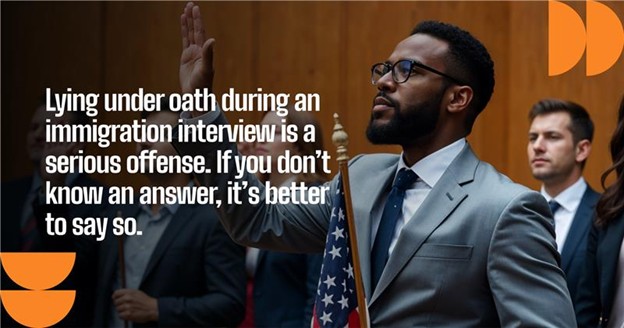
- Oath to tell the truth: You are typically placed under oath and reminded to answer truthfully.
- Question-and-answer portion: The officer asks about your forms, supporting evidence, and history.
- Possible outcomes: You may receive approval, an RFE, or notice of further review.
This overview reflects standard steps referenced in U.S. Citizenship and Immigration Policy 2026.
Common Immigration Interview Questions
Officers often begin with basic facts and then ask questions tied to eligibility and your filing.
Personal Information Questions
These questions confirm your identity and biographic details.
- Full legal name and any other names used
- Date and place of birth
- Address and contact details
- Nationality and citizenship
Residential History Questions
These questions confirm where you live and whether your addresses match your application.
- Current and past addresses
- How long you lived at each address
- Any moves since you filed
Education and Employment Questions
These questions verify your work and education history.
- Current employer, job title, and duties
- Salary or pay details, if asked
- Work history and any gaps
- Education history and degrees
Family History Questions
These questions confirm immediate family details.
- Parents’ names and basic information
- Spouse and children’s details
- Siblings’ names and locations
Relationship Questions (Marriage-Based Cases)
These questions check whether the relationship details match the evidence.
- How and when you met
- Wedding details and key dates
- Shared routines and responsibilities
- Spouse’s work and interests
Travel and Immigration History Questions
These questions address prior entries and compliance history.
- Prior visas and applications
- Overstays or unauthorized work, if any
- International travel history and recent trips
Legal and Criminal History Questions
These questions address issues that can affect eligibility.
- Any arrests, charges, or citations
- Immigration violations or prior denials
- Prior removals or misrepresentation concerns
Immigration Interview Questions by Application Type
The interview focus changes depending on the benefit you requested.
Family-Based Immigration Applications
Family-based interviews usually focus on the sponsor relationship and household facts.
- Sponsor identity, relationship, and status
- Living arrangements and shared address evidence
Employment-Based and Work Visa Applications
Work-related interviews usually focus on the job and employer details.
- Employer name, work location, and job role
- Job duties and job offer details
- Employer history with foreign workers, when relevant
How to Answer Immigration Interview Questions Correctly
Good answers are truthful, short, and consistent with what you filed.
Be clear and concise
Answer the question asked, then stop. Short answers reduce confusion.
Be honest and accurate
Do not guess. If you do not remember, say so and share what you can confirm.
Stay calm and composed
Speak slowly and listen carefully. Taking a moment before answering is fine.
Ask for clarification if needed
If you do not understand a question, ask for it to be repeated or rephrased.
Keep answers consistent with your application
Review your forms, addresses, and key dates before the interview to avoid contradictions.
Documents to Bring to an Immigration Interview
Bring documents that confirm identity and support the facts in your application.
- Interview notice
- Government-issued photo ID
- Passports and travel documents, if applicable
- Originals of key civil documents and copies
- Employment proof, if applicable
- Relationship evidence, if applicable
Common Mistakes to Avoid During an Immigration Interview
Avoid mistakes that create confusion or trigger extra review.
- Guessing instead of admitting uncertainty
- Contradicting application details
- Bringing incomplete documents
- Volunteering unnecessary information
What Happens After the Immigration Interview?
After the interview, the officer may decide immediately or request more information.
- Immediate approval: Some cases are approved at the interview or soon after.
- Request for Evidence (RFE): Additional documents may be required before a decision.
- Administrative processing: Some cases require additional checks before a decision can be issued.
- Timeline variability: Timing varies by case type, office workload, and whether more documents are needed.
Key Takeaways
- Most interview questions confirm facts already listed in your application.
- Preparation means reviewing your forms and organizing supporting documents.
- Clear, honest answers and consistency help reduce follow-up.
- An RFE, administrative processing, or further review can happen even when eligibility is strong.
- Decision timing varies by case type and office workload.
For more immigration guidance and resources, visit ImmigrationQuestion.com.
Frequently Asked Questions
- How long does an immigration interview last?
Many interviews last about 15 to 45 minutes, but timing depends on the case type and complexity. Some interviews take longer if additional issues must be clarified. - Can an immigration interview be waived?
Some interviews may be waived for certain benefits or case histories, but waivers are discretionary. Many applications still require an interview. - What if I do not remember an answer?
Say you do not remember rather than guessing. Offer what you can accurately confirm and provide documents if available. - Can I bring an attorney to the interview?
In many cases, you can bring an attorney or accredited representative. The officer usually expects the applicant to answer questions directly. - Does nervousness affect the outcome?
Nervousness is common and does not automatically affect a decision. What matters is whether your answers are truthful, consistent, and supported by your documents. - Can I bring an interpreter to the interview?
An interpreter may be allowed depending on the interview type and office practices. Follow your interview notice instructions if you need language help. - What if the officer asks for a document I do not have with me?
The officer may issue an RFE or provide instructions to submit the document later. Keep copies and submit exactly as directed.