
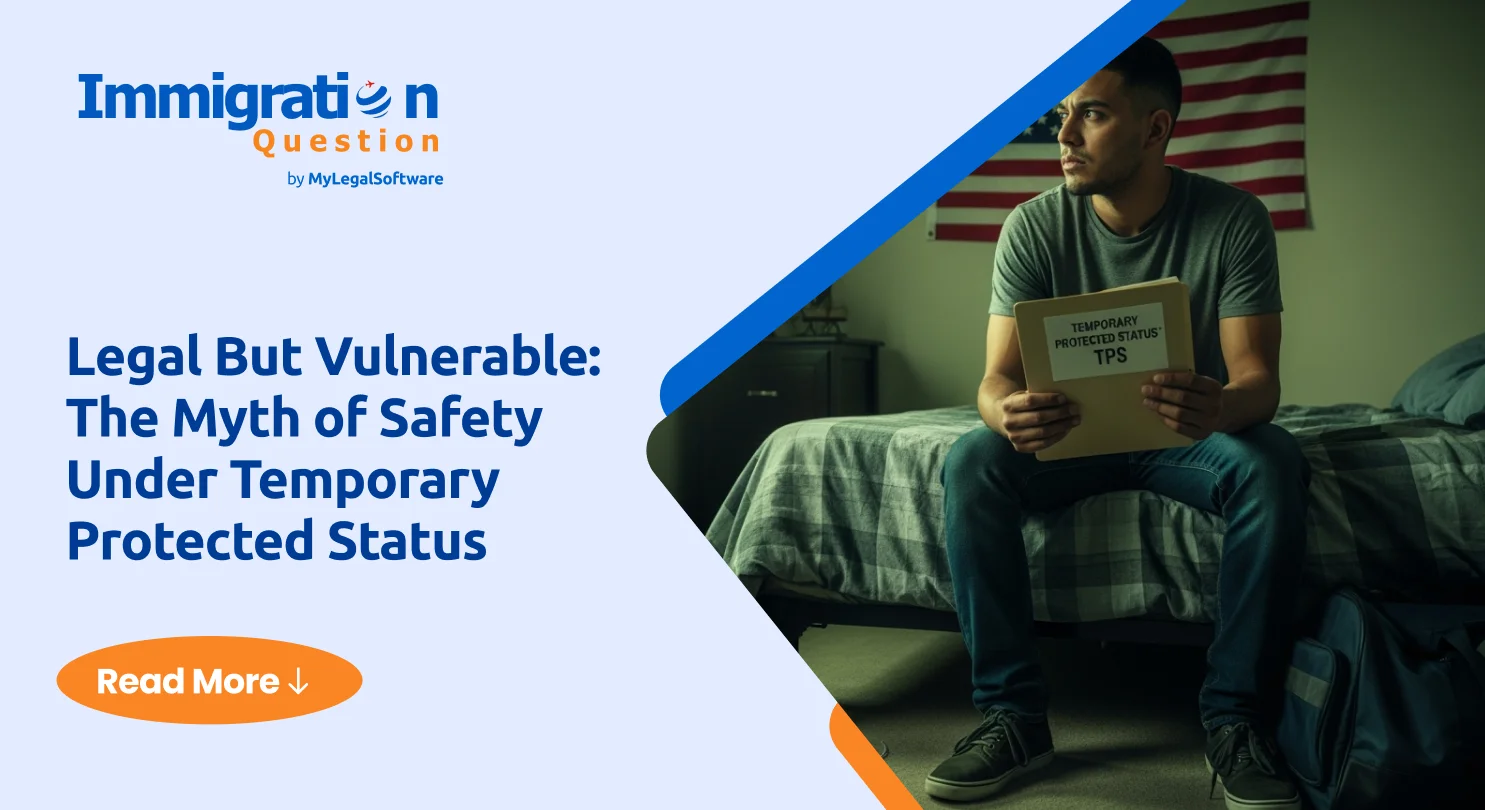
“Legal” Doesn’t Always Mean Safe
Imagine waking up every morning in a country you’ve called home for 25 years—raising your children here, working legally, contributing to your community—only to find out that your protection from deportation has quietly expired. You’re not undocumented. You’re not a criminal. You’re a Temporary Protected Status (TPS) holder. And now, you’re on borrowed time.
That’s the terrifying reality facing over 337,000 TPS beneficiaries across the U.S., many of whom have lived here legally for decades. Despite having legal status, these immigrants live under the constant threat of losing everything. Because TPS isn’t permanent. And lately, it isn’t even predictable.
It’s time we stop pretending TPS provides real security—and start addressing its legal, humanitarian, and political fragility.
1. The Temporary Trap: How Legal Status Creates False Comfort
TPS was created by Congress in 1990 to protect immigrants from countries devastated by war, environmental disaster, or humanitarian crises. It’s a legal status, but a temporary one, renewable only at the discretion of the Department of Homeland Security (DHS).
So, what’s the problem?
There’s no path to a green card. No permanent protection. No guarantees. And when administrations change, so do decisions about who gets to stay.
Just ask the Hondurans, Nicaraguans, and Venezuelans whose TPS designations were recently revoked by the Trump administration, many of whom now face deportation after over two decades of legal residency.
2. Long-Term Residents, Short-Term Promises
Many individuals with TPS status have been living in the U.S. for over 20 years. They’ve started businesses, raised families, and bought homes. Many have U.S. citizen children. Yet despite these deep ties, their status can be erased with one stroke of a pen.
The result? Legal limbo.
You can’t adjust your immigration status if you originally entered unlawfully—even if you’ve been here for decades. The Supreme Court confirmed this in Sanchez v. Mayorkas. TPS, they ruled, does not count as “admission” for green card eligibility.
So, when TPS ends, your legal life ends too.
3. When Protection Becomes Political
TPS was never meant to be political football. But that’s exactly what it has become.
In recent months, revocations of TPS for Venezuela, Haiti, Nepal, and Sudan have triggered protests, legal challenges, and uncertainty. Courts have intervened in some cases—temporarily blocking terminations—but the broader issue remains:
TPS decisions are driven by politics, not protection.
When DHS leadership changes hands, so does the fate of hundreds of thousands of families. That isn’t the law. That’s roulette.
4. The Hidden Economic Cost of TPS Instability
This isn’t just a moral issue—it’s an economic one as well.
TPS holders are deeply embedded in the U.S. workforce, particularly in industries like construction, elder care, agriculture, and food processing. Experts estimate that ending TPS for all beneficiaries would cost the U.S. economy over $45 billion in GDP over the next decade and create severe labor shortages in key sectors.
Businesses lose trained workers. States lose tax revenue. Families lose breadwinners. And communities lose trust in the rule of law.
5. What Legal Advocates Must Do Now
Temporary Protected Status may offer lawful presence, but it does not offer long-term security. As legal advocates, this is a moment to respond not with alarm, but with clarity and strategy. Whether through education, litigation, or policy engagement, there are concrete ways to support TPS holders—without overstating what the law currently provides or underestimating what it could become. Here’s how advocates can make a meaningful, measured impact.
1. Educate and Inform
TPS holders need to know their rights and options before their protection ends. Community-based “Know Your Rights” sessions—in Spanish, Haitian Creole, and Amharic—can help families prepare and protect themselves.
2. Litigate Strategically
Courts remain one of the last safeguards for TPS holders. Filing constitutional challenges, APA-based lawsuits, and emergency motions when TPS designations are abruptly terminated can delay harm and set legal precedent.
3. Push for Permanent Solutions
Temporary protection can’t mean permanent uncertainty. Legal advocates must encourage Congress to pass laws—like the American Dream and Promise Act—that provide a possible path to permanent residency for longtime TPS holders.
4. Coalition Power
Unite with civil rights groups, business leaders, and faith communities. Shared advocacy amplifies the impact. TPS isn’t just a legal issue; it’s a human one.
5. Humanize the Narrative
Every TPS holder has a story. Help them tell it. Personal testimonies in local news, op-eds, and public forums drive empathy, mobilize voters, and hold policymakers accountable.
Final Thoughts: The Status That Isn’t Safe
TPS may grant you legal presence, but it doesn’t grant peace of mind, as it is a temporary status. It doesn’t guarantee fairness, consistency, or permanence. And in today’s political climate, that’s a terrifying gamble.
For legal professionals, the mission is clear: We can’t afford to treat TPS as a solution. It’s a stopgap. And stopgaps, by nature, run out.
This is our moment to demand real reform, before more families lose everything they’ve built.
If you’re a TPS holder worried about what comes next—or if you support someone who is—ImmigrationQuestion.com is here for you.
Our network of licensed immigration attorneys offer trusted, timely help to navigate your status, prepare for emergencies, and explore legal options. Wherever you are in the world, you deserve security, clarity, and dignity.
Don’t wait for your protection to vanish—visit ImmigrationQuestion.com today to get answers, connect with legal experts, and find peace of mind.