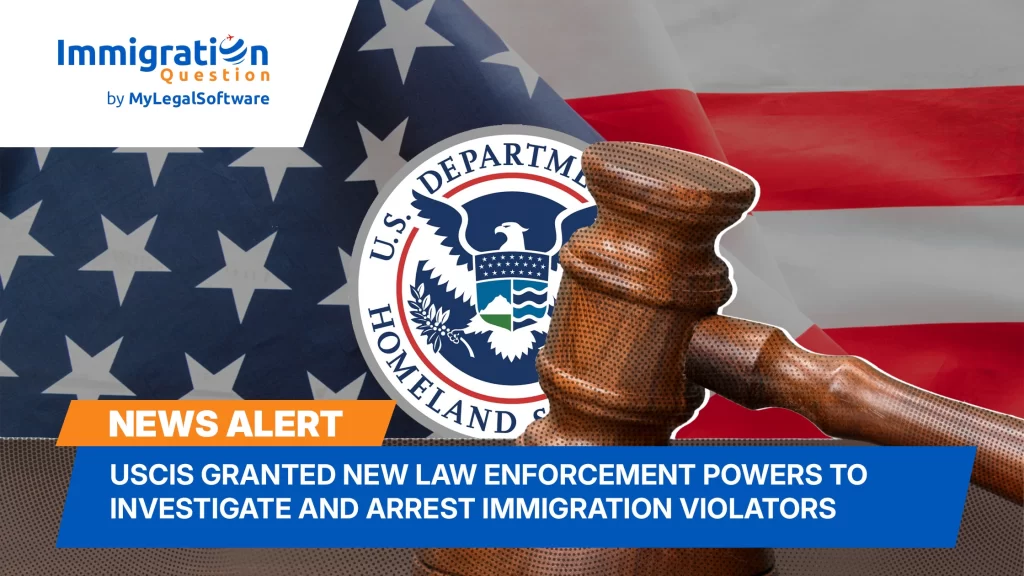
A final rule from DHS has granted U.S. Citizenship and Immigration Services (USCIS) expansive new law enforcement powers. It allows its officers to investigate, arrest, and prosecute those who violate immigration laws. This change shifts USCIS from a focus on providing benefits to one of greater enforcement capabilities. It further tightens the administration’s immigration agenda.
Expanded Enforcement Authority for USCIS
The final rule from the Department of Homeland Security classifies USCIS officers as 1811 special agents. These officers now possess powers that were traditionally reserved for federal law enforcement. They can make arrests, carry firearms, and execute search and arrest warrants during immigration investigations.
The change comes as the DHS seeks to strengthen USCIS’s role in detecting fraud, enhancing national security, and promoting public safety in immigration adjudications. Officials said the expansion is designed to align the agency’s adjudication work with enforcement, giving it direct tools to act against immigration fraud and related crimes.
Integration into DHS Enforcement Strategy
The rule formally implements Homeland Security Secretary Kristi Noem’s delegation of law enforcement authority to USCIS. This delegation allows the agency to not only handle civil immigration violations but also pursue criminal investigations when fraud or national security risks are identified in applications. The director will also have the power to order expedited removals.
By giving enforcement powers directly to USCIS, the administration aims to reduce reliance on other DHS agencies, particularly Immigration and Customs Enforcement (ICE). The shift is intended to allow ICE’s Homeland Security Investigations and Enforcement and Removal Operations divisions to focus more directly on transnational crime and deportation operations.
Clearing Backlogs and Targeting Fraud
Supporters of the rule claim that USCIS will now investigate and prosecute cases from start to finish without needing to transfer them to ICE. This change is expected to expedite the processing of cases involving fraudulent applications, unlawful presence, or security risks. Officials said this move will help reduce long-standing backlogs in the immigration system.
By directly prosecuting violators, USCIS can remove individuals who attempt to exploit the system, while also enhancing deterrence against immigration fraud. The agency’s new special agents will receive training to pursue both civil and criminal violations. This will expand enforcement efforts and ensure better oversight of immigration benefits.
Recruitment and Implementation
USCIS is getting ready to recruit and train a new group of special agents to use these authorities. The rule specifies that these officers will undergo federal law enforcement training in firearms handling, arrest procedures, and investigative practices before assuming their expanded roles.
The regulation will take effect 30 days after publication in the Federal Register. USCIS, once operational, will be a more dynamic player in the federal immigration enforcement system, complementing the efforts of ICE and Customs and Border Protection.
A Look Ahead
The decision to fortify USCIS’s enforcement powers illustrates the administration’s strategy of integrating immigration services and security missions. The rule is likely to elicit criticism from stakeholders who fear that USCIS’s dual roles as a provider of benefits and an enforcement agency will undermine due process for petitioners.
To activists and immigrant families, this shift represents a stricter approach to immigration decisions and enforcement. As USCIS takes on a more proactive law enforcement role, legal and policy disputes over the balance between service and enforcement will only intensify.
For timely updates and analysis on immigration enforcement and related immigration issues, visit ImmigrationQuestion.com. Get answers to your immigration questions from licensed immigration attorneys. For attorneys, use our innovative 2-in-1 case management software to grow your practice. Download our free app on Google Play and the Apple App Store.
Resources:
- https://www.uscis.gov/newsroom/news-releases/uscis-to-add-special-agents-with-new-law-enforcement-authorities
- https://www.nbcnews.com/news/us-news/uscis-hire-special-agents-trump-admin-us-citizenship-immigration-rcna229076
- https://abcnews.go.com/US/uscis-administers-immigration-system-adds-law-enforcement-agents/story?id=125256143
- https://thehill.com/homenews/administration/5486760-uscis-expands-law-enforcement/
- https://www.washingtonpost.com/immigration/2025/09/05/uscis-law-enforcement-arrest-green-cards/
**ImmigrationQuestion.com is a third-party platform that serves as a meeting ground for licensed immigration attorneys and people with immigration questions. It is not a law firm. It is not affiliated with or endorsed by USCIS or AILA. Attorneys on this platform are independent and have the discretion to offer a free consultation and/or set their fees under the law.