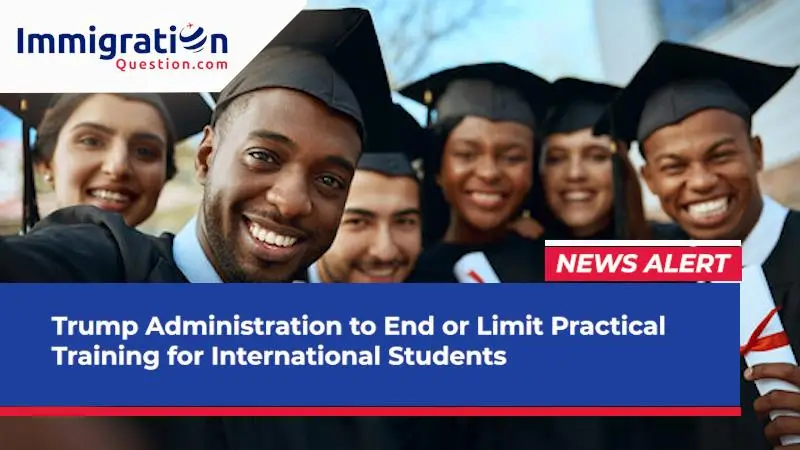
The Trump administration is preparing a rule that could end or restrict Optional Practical Training (OPT) and STEM OPT for international students. The change, expected by early 2026, would overhaul a decades-old program that allows foreign graduates to gain U.S. work experience, raising concerns about economic impact and competitiveness.
Administration Targets Student Work Program
The administration is advancing a regulatory change that could end or severely restrict OPT, the work authorization program that allows international students to gain practical experience after graduation. Listed on the Department of Homeland Security’s regulatory agenda, the proposal could take effect by early 2026.
OPT currently permits international students to work for 12 months in their field of study, while STEM OPT provides an additional 24 months of work authorization for those in science, technology, engineering, and math fields. The rule would either eliminate or impose strict limits on both programs, citing concerns about preventing fraud, maintaining national security, and protecting U.S. workers.
Policy Goals and Political Direction
According to DHS, the proposed rule aims to “better align practical training with program objectives” while improving oversight under the Student and Exchange Visitor Program. Analysts, however, say the plan reflects broader Trump-era efforts to restrict immigration pathways that allow international graduates to remain in the country.
White House Deputy Chief of Staff Stephen Miller is believed to be driving the initiative, with U.S. Citizenship and Immigration Services Director Joseph Edlow supporting the rollback. Both sides have claimed that OPT lacks clear legal approval and gives foreign workers an edge over Americans in the job market.
Impact on International Students and U.S. Universities
This change could impact over 240,000 international students currently in OPT and STEM OPT programs. DHS data from 2024 shows that more than 160,000 are enrolled in STEM OPT. Educators and economists warn that cutting these opportunities would make U.S. universities less appealing and limit access to global talent.
OPT has long acted as a pathway for foreign graduates moving to H-1B visas. It allows U.S. employers to keep skilled professionals in technology, healthcare, and research. Analysts fear that removing this route could hinder innovation and worsen workforce shortages in vital industries.
Two Policy Paths Under Consideration
Officials are considering two main options. The first would eliminate OPT and STEM OPT, which would likely face immediate legal challenges from universities and industry leaders. The second option would retain the programs but introduce new restrictions, such as wage thresholds, stricter employer reporting requirements, and enhanced compliance oversight.
Critics argue that OPT provides employers with a tax benefit, as companies do not pay Social Security taxes for student workers. Supporters counter that it builds practical skills and supports U.S. competitiveness. Some policymakers have suggested moderate reform, such as extending payroll taxes to OPT wages, rather than ending the program altogether.
Wider Immigration Context
The proposal follows other efforts by the Trump administration to narrow the options for student and work visas. Recent measures have included replacing the “duration of status” policy for F-1 students with fixed admission periods and revising H-1B selection criteria to favor senior professionals. Together, these moves represent a broader strategy to limit legal immigration channels.
This approach also contradicts Trump’s remarks during his 2024 campaign, in which he stated that international graduates should “automatically” be allowed to stay and work in the U.S. on green cards. The proposed rule signals a new approach to protecting domestic labor and promoting national self-sufficiency.
Looking Ahead
If finalized, the rule would transform how global students consider educational and career possibilities in America. Universities, technology companies, and advocacy groups are likely to dispute the plan, arguing that it would hinder innovation and economic growth by limiting the ability of international students to work after graduation.
For continued coverage of U.S. immigration policy and higher education developments, visit ImmigrationQuestion.com.
Get answers to your immigration questions from licensed immigration attorneys. For attorneys, use our innovative 3-in-1 case management software to improve your practice. Download our free app on Google Play and the Apple App Store.
Resources:
**ImmigrationQuestion.com is a networking platform founded by Immigration Attorneys. It serves as a meeting ground for licensed immigration attorneys and people with immigration questions. It is not a law firm. It is not affiliated with or endorsed by USCIS or AILA. Attorneys on this platform are independent and have the discretion to offer a free consultation and/or set their fees under the law.