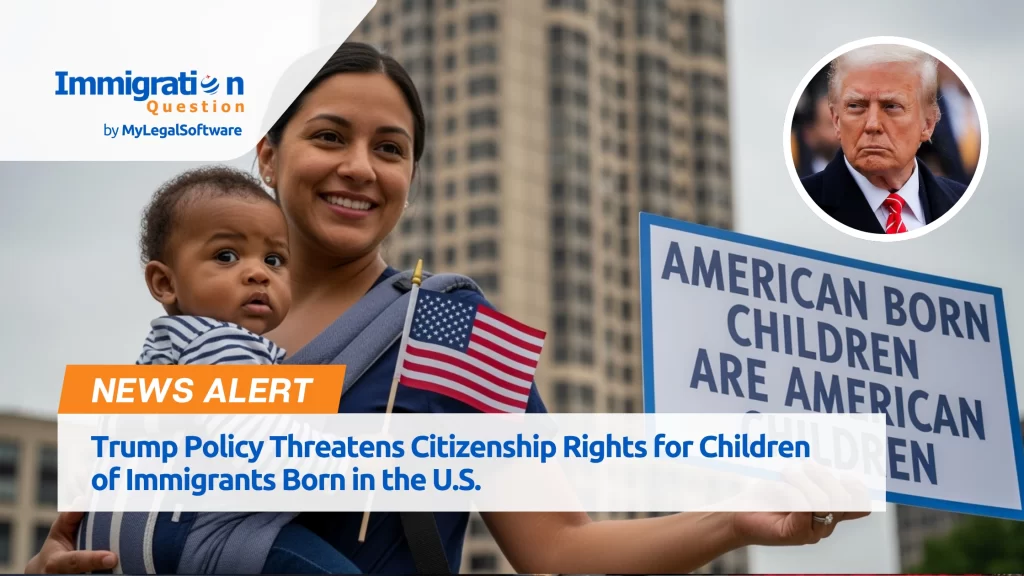
A recent U.S. Supreme Court ruling has ignited widespread confusion and fear among immigrant families after the court allowed President Donald Trump’s controversial birthright citizenship restrictions to take a significant step forward. The decision, handed down Friday by the court’s conservative majority, did not explicitly rule on the legality of Trump’s executive order but granted his administration the power to implement it—leaving thousands scrambling for legal guidance.
At the heart of the issue is birthright citizenship, a right long presumed to be guaranteed under the 14th Amendment of the U.S. Constitution: anyone born on U.S. soil is automatically a U.S. citizen, regardless of their parent’s citizenship or immigration status. The court ruling, while procedural, opens the door to a patchwork system where this right could now depend on where a child is born—and who their parents are.
Fear and Uncertainty Ripple Through Immigrant Communities
The fallout was immediate. Immigration attorneys across the country reported a flood of phone calls from expectant immigrant parents, asylum seekers, and visa holders trying to understand whether their children would still be granted U.S. citizenship at birth. Among them was Lorena, a 24-year-old Colombian asylum seeker in Houston, who is due to give birth in September. Lorena expressed her concerns over whether or not her baby would be born with U.S. citizenship or if she would need to add her child to her asylum case. Lorena’s primary concern is that her child will be born without a country.
Like Lorena, countless other immigrants are anxiously trying to understand what Friday’s decision means for their families. Trump’s executive order, signed shortly after he began his second term in January, directs federal agencies to deny automatic citizenship to children born in the U.S. unless at least one parent is a U.S. citizen or lawful permanent resident.
A Complex Legal Landscape
Three separate federal judges initially blocked the order, prompting a legal battle that reached the Supreme Court. While the high court did not rule on the constitutionality of birthright citizenship itself, it did allow Trump’s policy to proceed in 30 days—unless further legal action succeeds in stopping it.
That’s precisely what plaintiffs attempted on Friday afternoon, filing an amended lawsuit in federal court in Maryland. Their goal is to establish a nationwide class of individuals affected by the policy and potentially prevent it from taking effect. Without a universal block, the policy could go into effect in 28 states that did not participate in the legal challenge, creating a chaotic and inconsistent landscape across the country.
A Patchwork of Rights—and Rights Denied
According to Kathleen Bush-Joseph of the nonpartisan Migration Policy Institute, this could create an extremely confusing patchwork. The big question is: Would doctors or hospitals now be expected to determine a baby’s citizenship status at birth?
Immigration advocates fear the policy could ultimately deny birthright citizenship to as many as 150,000 U.S.-born children each year. Citizens fear that this situation could lead to the creation of distinct classes of people with varying rights in the country. In states where Trump’s policy could be enforced, many immigrant families are left wondering what their options are. Some are turning to immigrant advocacy groups—like CASA and the Asylum Seeker Advocacy Project—which were explicitly mentioned in the ruling as still protected under previous court injunctions.
What’s Next?
As legal challenges unfold, immigration attorneys and advocacy organizations are urging affected families to stay informed and consult legal professionals. In the meantime, the ruling has reignited a national debate over the meaning of citizenship—and who gets to claim it.
For timely updates and analysis on immigration enforcement and related immigration issues, visit ImmigrationQuestion.com. Get answers to your immigration questions from licensed immigration attorneys. For attorneys, use our mind-blowing 2-in-1 case management software to grow your practice. Download our free app on Google play and App Store.
Resources:
- https://www.reuters.com/world/us/immigrants-scramble-clarity-after-supreme-court-birthright-ruling-2025-06-28/
- https://apnews.com/article/birthright-citizenship-trump-supreme-court-next-steps-11ce3a0dfe3a30c0ee1b67b92a322f01
- https://blog.immigrationquestion.com/news/nationwide-block-on-trumps-birthright-citizenship-order-holds-firm/
- https://blog.immigrationquestion.com/news/court-temporarily-blocks-president-trumps-birthright-citizenship-executive-order/
- https://blog.immigrationquestion.com/news/trump-administration-pushes-for-partial-restrictions-on-birthright-citizenship-at-supreme-court/
**ImmigrationQuestion.com is a third-party platform that connects licensed immigration attorneys with users, it is not a law firm. It is not affiliated with or endorsed by USCIS or AILA. Attorneys on this platform are independent and have the discretion to offer a free consultation and/or set their own fees under the law.