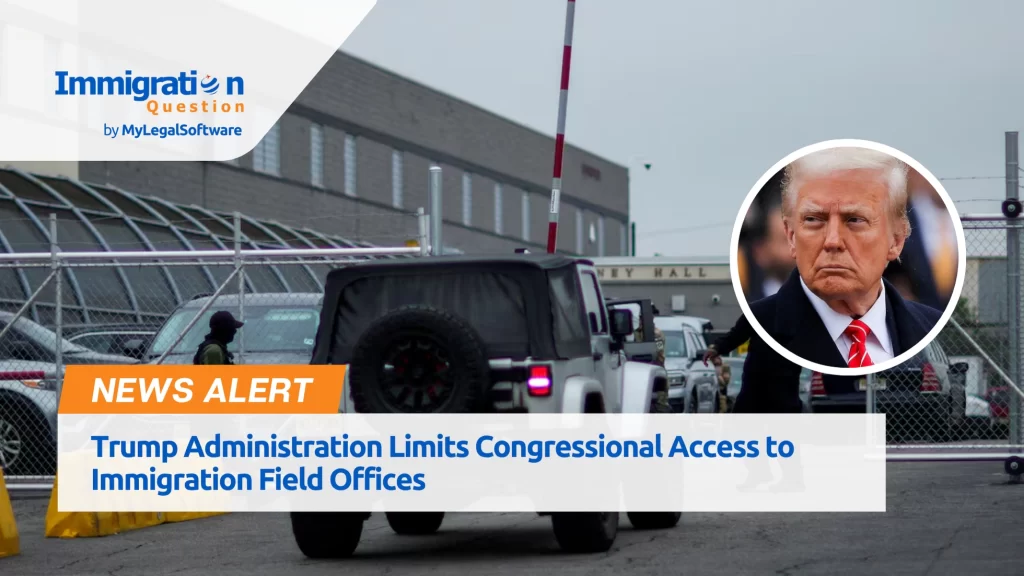
The Trump administration has launched new regulations severely restricting congressional visits to immigration field offices operated by U.S. Immigration and Customs Enforcement (ICE). The policy, implemented quietly this month, grants ICE broad discretion to approve, deny, or rescind visits by members of Congress, thereby raising the stakes even higher in immigration enforcement and government transparency.
ICE Granted Full Discretion Over Lawmaker Visits
Under the new rules, ICE officials now have sole discretion to permit or block congressional visits to field offices, which serve as processing and temporary holding sites for immigrants. The guidelines allow ICE to deny or reschedule visits without explanation or formal review.
While federal law guarantees lawmakers access to immigration detention centers without prior notice, DHS claims this rule does not extend to ICE field offices. Under the new policy, members of Congress must submit a request at least 72 hours in advance for such visits.
ICE stated that it will make every effort to comply with the law and accommodate visits. However, critics fear the changes are designed to obstruct transparency and shield the agency’s practices from scrutiny.
Oversight Clashes Spark Arrests
The policy follows a series of tense encounters between ICE and local or federal elected officials attempting oversight visits. These incidents have intensified under President Trump’s latest immigration crackdown, which prioritizes aggressive deportations and mass enforcement actions. On May 9, U.S. Representative LaMonica McIver of New Jersey was arrested after a confrontation at a detention center entrance during a scheduled oversight visit. Newark Mayor Ras Baraka and New York City Comptroller Brad Lander were also temporarily detained on recent ICE center visits. The arrests have driven anger from immigrant rights groups and political leaders, who assert that ICE is utilizing rules of access as a weapon of oppression to stifle criticism and evade accountability.
Legal Experts Question Constitutionality
The new ICE guidelines are facing legal scrutiny, with constitutional scholars raising alarms about potential violations of congressional oversight authority.
According to Professor Elena Garcia of the NYU School of Law, Congress has a constitutional duty to monitor the actions of federal agencies, and these restrictions undermine that duty, potentially setting a dangerous precedent for unchecked executive power.
Civil liberties groups have also voiced concern that the administration is limiting access at a time when reports of poor conditions and mistreatment in immigration facilities are rising.
Transparency and Accountability at Risk
Critics argue that restricting access to Congress undermines public trust and serves as a means of whitewashing misconduct. Oversight visits have long served the valuable purpose of exposing abuse, overcrowding, and denial of basic services in ICE detention facilities.
Some individuals from the Human Rights First organization believe that by allowing ICE to choose which lawmakers can observe its operations selectively, there is little to no room for accountability. They emphasize that without oversight, there’s no guarantee that detainees are being treated lawfully and humanely.
Some members of Congress have already vowed to challenge the new rules through legislation or legal action to restore unrestricted access to immigration enforcement facilities.
Experts say curtailing oversight is a tactical move to avoid public scrutiny as ICE increases raids and deportations across the country. The administration has already faced criticism for targeting international students and political protesters, fueling broader concerns about civil liberties under Trump’s immigration policies.
For timely updates and analysis on immigration enforcement and related immigration issues, visit ImmigrationQuestion.com. Get answers to your immigration questions from licensed immigration attorneys. For attorneys, use our mind-blowing 2-in-1 case management software to grow your practice. Download our free app on Google play and App Store.
**Immigration Question is a third-party platform that connects licensed immigration attorneys with users, it is not a law firm. It is not affiliated with or endorsed by USCIS or AILA. Attorneys on this platform are independent and have the discretion to offer a free consultation and/or set their own fees under the law.