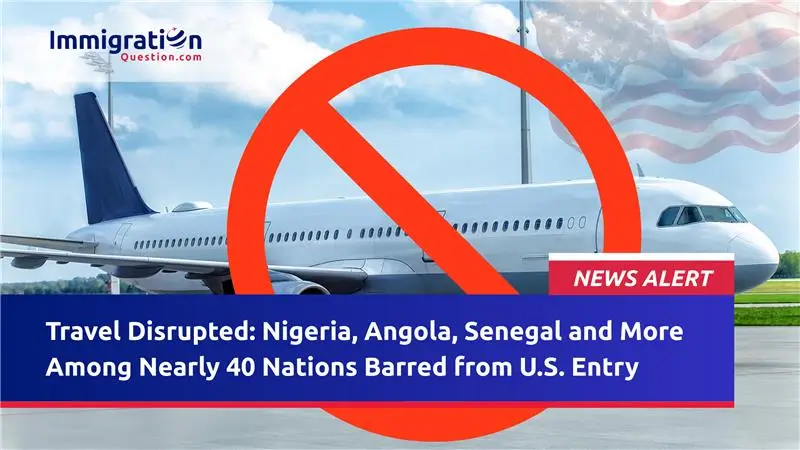
The United States has expanded its travel restrictions to nearly 40 countries, including Nigeria and 25 other African nations, in a major shift in U.S. immigration policy that took effect on January 1, 2026. The new travel ban, announced in mid-December 2025, bars or restricts the entry of foreign nationals solely based on their nationality and heightened security, documentation, and overstay concerns, dramatically affecting travel, tourism, work, and family reunification for citizens of the targeted countries.
Expanded Travel Ban Targets Broader Set of Countries
According to U.S. government proclamations and statements from the U.S. mission in Nigeria, the expanded travel restrictions apply to a wide range of nations, particularly across Africa, the Caribbean, and other regions. The policy does not revoke existing valid visas, but it means that foreign nationals from affected countries outside the United States as of January 1, 2026, and without valid visas, will be barred from entry.
Among the countries listed in the new restrictions are:
- Africa: Nigeria, Angola, Benin, Burundi, Côte d’Ivoire, Gabon, The Gambia, Malawi, Mauritania, Senegal, Tanzania, Togo, Zambia, Zimbabwe
- Caribbean & Americas: Antigua and Barbuda, Cuba, Dominica, Venezuela
- Pacific: Tonga
These nations are on top of other countries already subject to U.S. travel bans, including Afghanistan, Chad, the Republic of the Congo, Equatorial Guinea, Eritrea, Haiti, Iran, Libya, Somalia, Sudan, Yemen, and partial restrictions on others.
Why These Travel Restrictions Were Imposed
The White House and senior U.S. officials have justified the expanded travel restrictions on the grounds of national security, counterterrorism, identity management, and visa overstay rates. U.S. authorities point to concerns about inadequate documentation systems, limited cooperation on information-sharing, and unresolved security risks as the basis for adding countries such as Nigeria and other African states to the list.
A presidential proclamation cited high overstay rates and “security and documentation” concerns, particularly in some Sahel and sub-Saharan states where militant groups and ongoing conflict have contributed to instability. In Nigeria’s case, the administration referenced past visa overstay data as part of its reasoning for imposing restrictions.
While the bans are framed as measures to protect U.S. citizens and ensure robust vetting, critics argue that the policy disproportionately targets developing nations and may deepen diplomatic tensions.
Immediate Effects on Travel and Mobility
Under the new restrictions, foreign nationals from the affected countries outside the U.S. without valid visas will be unable to travel to the United States. Visas issued prior to January 1, 2026, generally remain valid, but new applications may face higher scrutiny or outright denial under the ban. Students, workers, tourists, and family members planning U.S. travel from those countries may have to postpone or cancel plans.
U.S. embassies and consulates have notified respective governments and posted guidance outlining the implications of the proclamation on visa issuances and entry procedures.
Diplomatic Backlash and International Responses
The expanded travel ban has already triggered diplomatic pushback in some regions. Mali and Burkina Faso announced reciprocal travel restrictions on U.S. nationals in response to the inclusion of their citizens on the U.S. ban list, illustrating how the policy could prompt tit-for-tat measures and deteriorate bilateral relations.
Critics, including civil society organizations and some African leaders, argue that the travel restrictions may unfairly penalize ordinary citizens and harm economic, educational, and cultural exchange. They warn that the restrictions could undermine cooperation on shared security goals and complicate ongoing efforts to improve border and documentation systems.
Looking Ahead
As the travel ban remains in force, affected nations and advocacy groups are expected to seek clarification and possible exemptions for students, essential workers, and humanitarian cases. How the United States balances security objectives with global diplomatic and economic ties will continue to be watched closely, particularly as travel disruptions ripple across tourism, trade, and family reunification networks.
To learn more about recent U.S. immigration policy developments, visit ImmigrationQuestion.com, a meeting ground for individuals seeking clarity on U.S. immigration policy.
Get answers to your immigration questions from licensed immigration attorneys. For attorneys, use our innovative 3-1 case management to improve your practice. Download our free app on the Google Play Store and the Apple App Store.
Resources:
https://guardian.ng/news/why-us-is-placing-travel-ban-on-nigeria-25-other-african-countries/
ImmigrationQuestion.com is a networking platform founded by Immigration Attorneys. It serves as a meeting ground for licensed immigration attorneys and people with immigration questions. It is not a law firm. It is not affiliated with or endorsed by USCIS or AILA. Attorneys on this platform are independent and have the discretion to offer a free consultation and/or set their fees under the law.