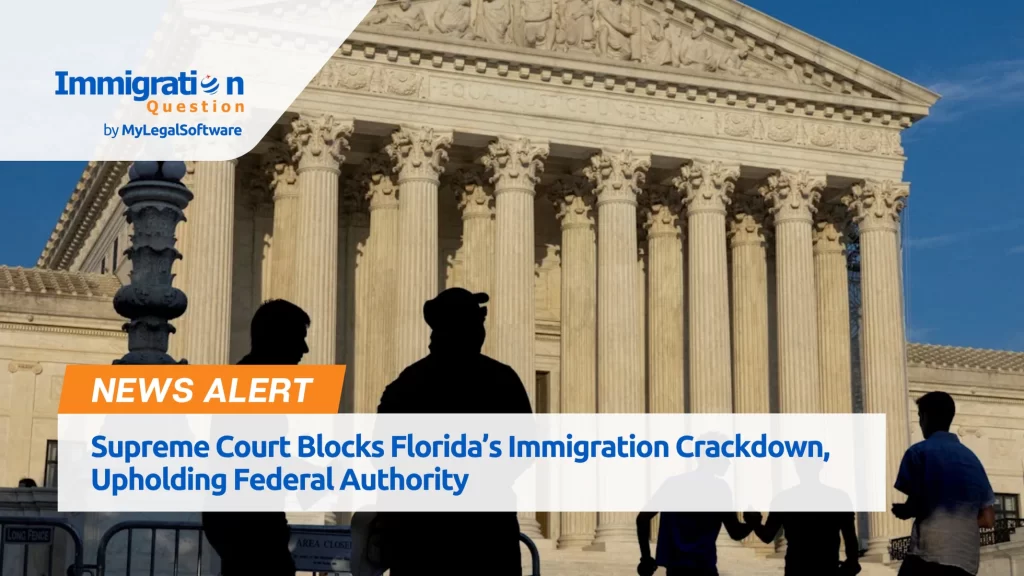
A major legal showdown over state immigration powers reached a turning point on Wednesday, July 9, 2025, as the US Supreme Court declined Florida’s emergency request to enforce its sweeping new immigration law, Senate Bill 4-C (SB 4-C). The unsigned order, brief and without dissent, leaves in place a lower court’s block on the law and signals the judiciary’s ongoing hesitation over states taking immigration enforcement into their own hands.
Florida’s Immigration Law Hits a Wall in Court
Enacted in February 2025 and championed by Governor Ron DeSantis, SB 4-C sought to make it a crime for undocumented immigrants to enter or return to Florida, create new criminal offenses for those previously deported, and require local authorities to work closely with federal immigration officials. The law also mandated pretrial detention without bond for those suspected of violating its provisions and threatened penalties for local governments that failed to comply.
Civil rights groups, including the Florida Immigrant Coalition and the Farmworker Association of Florida, quickly challenged the law, arguing it usurped federal authority, risked racial profiling, and threatened due process for both citizens and noncitizens. Their lawsuit cited the case of Juan Carlos Lopez-Garcia, a US citizen mistakenly detained for 24 hours under the law, as evidence of its potential for abuse.
Federal Law Takes Priority
In April, U.S. District Judge Kathleen Williams blocked the law with a preliminary injunction, finding that it likely violated the Constitution’s supremacy clause by intruding on federal immigration powers.
Florida’s Attorney General, James Uthmeier, appealed to the 11th Circuit, which refused to lift the injunction and scheduled arguments for October 2025. Judge Williams later held Uthmeier in contempt after discovering law enforcement continued to enforce SB 4-C despite her order. She required him to file biweekly reports detailing all arrests made under the law.
Supreme Court Maintains the Block
On July 9, 2025, Florida asked the Supreme Court for emergency permission to enforce SB 4-C, arguing it was essential to public safety and aligned with federal immigration policy. The Trump-aligned administration filed a brief backing Florida, joined by 18 other Republican-led states.
The Supreme Court, however, declined to intervene. As is standard for emergency requests, the order offered no explanation and noted no dissents. The decision keeps the law on hold while the legal process continues.
Reactions From Both Sides
The American Civil Liberties Union (ACLU) praised the decision as a reaffirmation of the principle that immigration enforcement is a federal responsibility:
“This ruling affirms what the Constitution demands — that immigration enforcement is a federal matter and that no one should be stripped of their liberty without due process.”
Florida’s Attorney General insisted the law was needed to address the harms of illegal immigration and argued that states have long played a role in regulating the movement of noncitizens.
Critics warned the law would lead to racial profiling, undermine trust in law enforcement, and put thousands at risk of unjust detention and family separation.
Looking Ahead
For now, Florida cannot enforce SB 4-C. The preliminary injunction remains in place until the 11th Circuit hears oral arguments this October.
The case is expected to become a key legal precedent on how far states can go when it comes to immigration enforcement, and where the line of federal preemption stands.
Florida’s blocked law is part of a nationwide trend, with at least six other states passing similar measures in recent years, most of which have been halted by the courts. The Supreme Court’s refusal to lift the block follows its own 2012 decision in Arizona v. United States, which firmly established that immigration enforcement is a federal function.
For timely updates and analysis on immigration enforcement and related immigration issues, visit ImmigrationQuestion.com. Get answers to your immigration questions from licensed immigration attorneys. For attorneys, use our innovative 2-in-1 case management software to grow your practice. Download our free app on Google Play and Apple’s App Store.
Resources:
- https://www.reuters.com/legal/government/us-supreme-court-declines-let-florida-enforce-immigration-crackdown-2025-07-09/
- https://www.politico.com/news/2025/07/09/supreme-court-declines-to-lift-hold-on-floridas-tough-immigration-law-00445583
- https://www.nytimes.com/2025/07/09/us/politics/supreme-court-florida-immigration-law.html
- https://www.courthousenews.com/supreme-court-bars-florida-from-arresting-migrants-leashing-strict-immigration-law/
- https://www.aclu.org/press-releases/federal-court-halts-floridas-cruel-anti-immigrant-law-sb-4-c-in-major-victory-for-immigrant-justice
- https://globalnation.inquirer.net/284236/us-supreme-court-blocks-florida-immigration-law
- https://www.washingtonexaminer.com/news/3467379/supreme-court-blocks-florida-from-enforcing-law-targeting-illegal-immigrants/
**ImmigrationQuestion.com is a third-party platform that serves as a meeting ground between licensed immigration attorneys and people with immigration questions. It is not a law firm. It is not affiliated with or endorsed by USCIS or AILA. Attorneys on this platform are independent and have the discretion to offer a free consultation and/or set their own fees under the law.