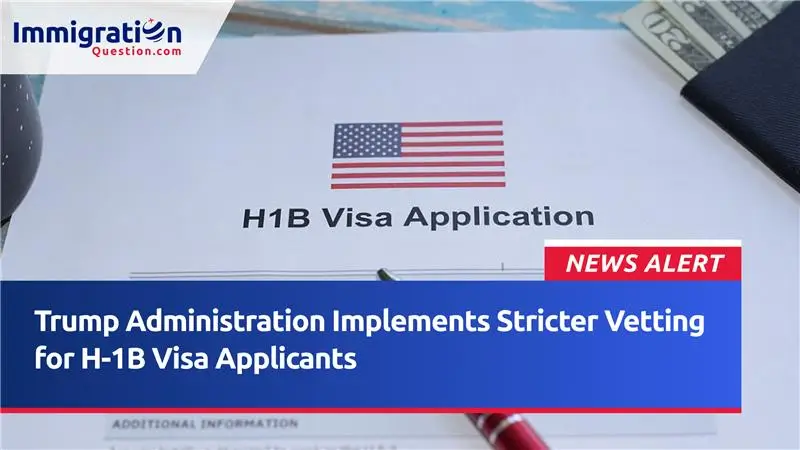
The Trump administration imposed increased scrutiny on H-1B visa applicants. They focused mainly on past involvement in content moderation, misinformation, or censorship. U.S. consular officers have been instructed to review employment histories and online profiles to determine eligibility; the move reflects the administration’s emphasis on protecting free speech while overseeing skilled-worker immigration.
Improved H-1B Visa Screening Guidance Issued
The Trump administration is implementing new internal guidance that will require increased vetting of H-1B visa applicants, which allows U.S. companies to hire highly skilled foreign workers. The internal memo now directs consular officers to scrutinize the résumés, LinkedIn profiles, and employment histories submitted by applicants for any involvement in content moderation, fact-checking, misinformation, or censorship activities. This increased scrutiny also extends to family members traveling with them.
Officials have made it clear that applicants could be found ineligible if their professional history indicates involvement in repressing or censoring protected expression within the United States. The guidance refers to a specific article of the Immigration and Nationality Act. It outlines the legal reasons for declaring candidates ineligible if their previous actions could threaten free speech protections in the U.S.
Focus on Free Speech and Technology Sector Roles
H-1B visas are in high demand among tech companies in the United States, particularly for hiring workers from countries such as India and China. The stricter vetting policies will affect both first-time applicants and those re-applying. This ensures that foreign nationals working in the U.S. do not engage in activities the administration sees as limiting free speech or manipulating online discussions. The focus on content moderator positions shows that the administration is concerned about possible foreign-led censorship.
This guidance reflects a broader effort to protect free speech in U.S. foreign policy, especially amid concerns about the suppression of conservative voices on digital platforms. By targeting sectors where content moderation and information management are essential, officials aim to ensure that highly skilled workers help meet U.S. labor needs without risking protected expression.
Implications for Immigration Policy and Visa Processing
The expanded screening is part of a broader immigration enforcement push by the administration that also has included increased scrutiny of student visa applications and new fees for H-1B applicants. The policy indicates possible future operational changes at U.S. consulates worldwide, where consular officers would have to devote more time to scrutinizing the professional history of applicants. It could mean longer processing times for highly skilled worker visas, particularly for those in technology and social media fields.
Observers note that the policy may also affect the balance among labor market needs, national security concerns, and constitutional protections for free expression. The administration applies heightened scrutiny to foreign applicants with experience in content moderation or a related field, with the aim of reducing foreign-led censorship on online platforms while continuing to ensure access to the essential technical talent for which critical sectors of the U.S. economy depend on.
Looking Ahead
Analysts say the broader H-1B vetting policy could affect hiring practices for U.S. tech firms and influence the international mobility of skilled workers. The policy is expected to be one of the most controversial points among immigration experts, labor advocates, and business leaders.
Federal agencies are expected to closely continue scrutinizing visa applications to prevent foreign involvement in events that limit free expression. For the latest information on H-1B visa processing, immigration laws, and other policy developments, visit ImmigrationQuestion.com.
Get answers to your immigration questions from licensed immigration attorneys. For attorneys, use our innovative 3-in-1 case management software to improve your practice. Download our free app on Google Play and the Apple App Store.
Resources
**ImmigrationQuestion.com is a networking platform founded by Immigration Attorneys. It serves as a meeting ground for licensed immigration attorneys and people with immigration questions. It is not a law firm. It is not affiliated with or endorsed by USCIS or AILA. Attorneys on this platform are independent and have the discretion to offer a free consultation and/or set their fees under the law.