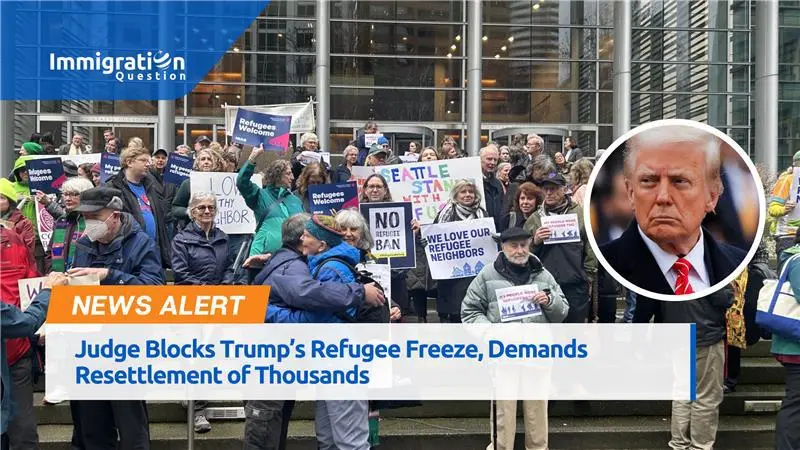
A federal judge has ordered the Trump administration to admit 12,000 refugees already approved to enter the U.S. The ruling rejects the administration’s attempt to limit entries and reaffirms legal protections for displaced individuals who had made travel plans before Trump’s order suspended the refugee program.
Court Blocks Refugee Freeze
The ruling follows a lengthy legal dispute over the administration’s efforts to suspend the refugee admissions program, which was halted by an executive order issued at the beginning of Trump’s second term in January.
The order came from U.S. District Judge Jamal Whitehead after hearing arguments about interpreting a recent appeals court decision. The judge rejected the administration’s narrow reading of the ruling, which would have limited admissions to only 160 refugees. According to the court, the government’s interpretation added limitations not present in the appeals court’s text and went against legal precedent.
Administration Pushback Denied
While the Department of Justice had argued that only refugees with imminent travel plans should be admitted, the court found no such restriction in the appeals court’s directive. Instead, Judge Whitehead emphasized that refugees who had previously arranged and confirmed travel to the U.S. before January 20 should be processed- regardless of their travel dates.
This category includes thousands who have completed the rigorous vetting process and made significant life changes in anticipation of relocation. The government’s attempt to scale the number to a mere 160 was deemed a deliberate misinterpretation of the court’s intent.
A Long-Standing Pathway Interrupted
Refugee admissions differ from asylum. While asylum-seekers request protection after arriving in the U.S., the refugee process applies to displaced individuals overseas who have undergone extensive screening before being cleared for entry. The program, established in 1980 by Congress, has long provided a legal path for those fleeing war, persecution, or natural disaster.
Under Trump’s order, this legal process was suspended, triggering lawsuits from affected individuals and refugee resettlement agencies. The agencies also reported halted funding, layoffs, and major disruptions in assisting refugees in the U.S.
Judge Whitehead, appointed by President Biden, initially blocked enforcement of Trump’s executive order. While the Ninth Circuit Court of Appeals scaled back that decision in March—highlighting the president’s authority on immigration—it still required the administration to follow through with admissions for those already approved.
Refugees Left in Limbo
The government’s delay in processing these cases has left thousands in difficult situations. Many refugees sold property, resigned from jobs, or uprooted their lives based on assurances that they would be resettled in the U.S. Refugee aid groups stressed that any further delays could result in the expiration of medical and security clearances, restarting the vetting process from scratch.
In response to the court’s latest order, the Trump administration must notify government agencies and embassy staff within seven days to resume case processing. Immediate steps must also be taken to facilitate the entry of those whose approvals remain valid.
What’s Next?
The court’s order could set the stage for further legal battles as the administration considers appealing the decision. In the meantime, refugee agencies are preparing to resume operations and support the incoming individuals. While the Trump administration continues its restrictive immigration agenda, the legal requirement to honor prior refugee commitments may temporarily slow the pace of broader changes to humanitarian migration.
To stay updated, visit our news page or ask your immigration questions on immigrationquestion.com and get answers from experienced attorneys.