
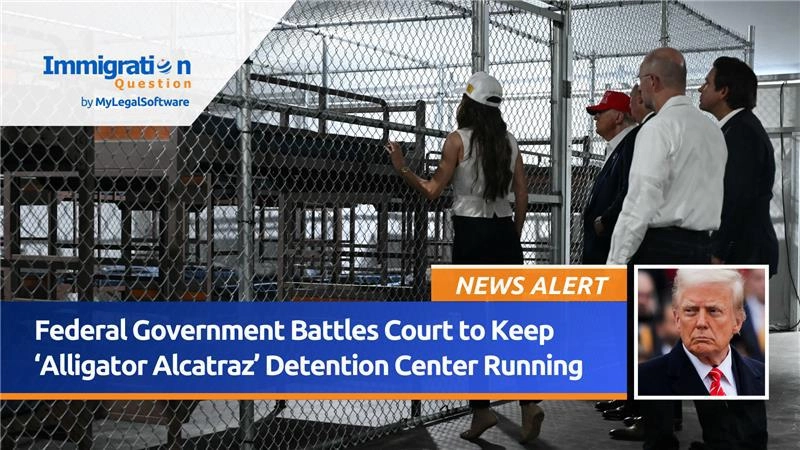
The Trump administration is moving aggressively to keep Florida’s controversial Everglades detention complex—known as “Alligator Alcatraz”—operational despite a federal court order requiring its closure. The government argues that shutting the facility would undermine immigration enforcement. At the same time, critics insist the site poses environmental dangers and violates detainees’ rights.
Federal Push to Block Court-Ordered Shutdown
Government attorneys have asked U.S. District Judge Kathleen Williams to suspend her ruling requiring the Everglades detention facility to close within 60 days. They argued the 2,000-bed site is vital to immigration enforcement in Florida, where detention capacity is already under strain. Officials warned that winding down operations would jeopardize public safety and federal border enforcement.
The Department of Homeland Security (DHS) urged the court to issue an expedited stay, stressing that the facility is essential to managing rising caseloads. Immigration and Customs Enforcement (ICE) authorities argued that losing the complex would cause disruption to the detention network within the state, compelling migrants to be deported hundreds of miles away and posing significant logistical challenges.
Environmental and Legal Concerns
Judge Williams’ order cited both environmental and legal issues in requiring the facility’s closure. She directed that no new detainees be admitted, the population be reduced within 60 days, and infrastructure such as fencing, lighting, and generators be dismantled once the complex is emptied. The decision underscored the threat to the fragile wetlands ecosystem surrounding the site.
Advocates argue the $245 million facility, built in just two months, risks undoing decades of federal restoration work in the Everglades. Lawsuits have highlighted that the construction and continued operation disrupt endangered wildlife habitats and damage critical floodplains. The court found these risks sufficient to outweigh DHS’s enforcement concerns.
Multiple Lawsuits Intensify Pressure
The Everglades detention center is already the subject of multiple ongoing lawsuits. In July, civil rights attorneys filed a case alleging that detainees were denied confidential access to legal counsel. Although portions of that case were transferred to another district, its central claims remain active and continue to pose challenges for the government.
A third lawsuit, filed last week in Fort Myers, accuses Florida of unlawfully operating the facility without proper federal authority. Attorneys alleged that detainees have been held without charges or bond determinations and that records of custody frequently disappear. The suit also cites systemic due process violations not commonly seen in other immigration facilities nationwide.
Reports of Harsh Conditions Inside
Internal reports from “Alligator Alcatraz” describe inhumane conditions, including flooding, mosquitoes, and unsanitary living spaces. Detainees and lawyers report that clean water and medical care are typically denied, and that at least some migrants have been coerced into signing removal orders without the advice of an attorney.
Supporters warn that secrecy on custody and transfers puts detainees in a vulnerable position to be abused. They argue that a lack of transparency, in addition to overcrowding in the detention system of Florida, has made abuses go unchecked. Calls for broader investigations are growing as new testimony comes to light.
What Comes Next
The court’s upcoming decision on whether to grant the government’s stay request will determine the immediate future of “Alligator Alcatraz.” If the stay is denied, the facility’s population will begin to be transferred out within weeks. The detention center may be kept open if approved, pending further appeals.
With several cases still in litigation and others in the pipeline, the Everglades complex has now come to serve as a flagship test of federal detention authority, environmental protection, and due process rights. The case will likely shape not only Florida’s detention infrastructure but also the broader national debate over how far the government can go in expanding immigration enforcement.
For timely updates and analysis on immigration enforcement and related immigration issues, visit ImmigrationQuestion.com. Get answers to your immigration questions from licensed immigration attorneys. For attorneys, use our innovative 2-in-1 case management software to grow your practice. Download our free app on Google Play and the Apple App Store.
Resources:
- https://apnews.com/article/florida-immigration-ice-detention-center-0ab308d83d59d86fe18a802100a19fe3
- https://blog.immigrationquestion.com/news/judge-to-weigh-detainees-legal-rights-at-alligator-alcatraz-in-florida-everglades/
**ImmigrationQuestion.com is a third-party platform that serves as a meeting ground for licensed immigration attorneys and people with immigration questions. It is not a law firm. It is not affiliated with or endorsed by USCIS or AILA. Attorneys on this platform are independent and have the discretion to offer a free consultation and/or set their fees under the law.