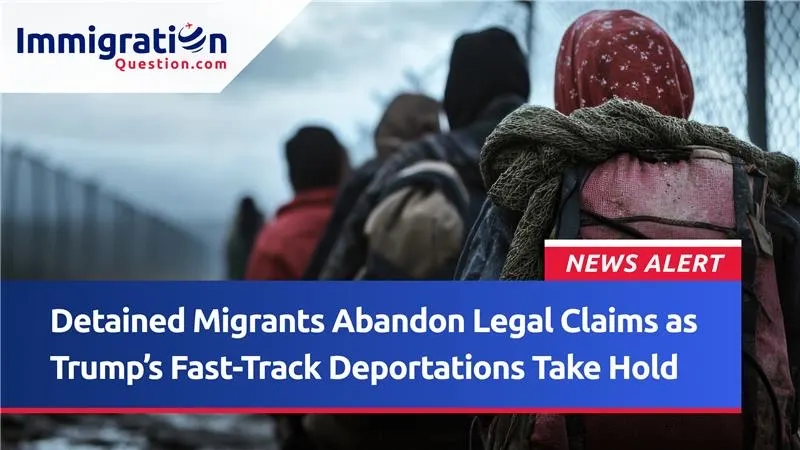
More detained immigrants are abandoning their bids to remain in the U.S. under the Trump administration’s rapid deportation campaign. Under dire conditions of substandard medical care, prolonged detention, and mounting enforcement pressure, they waive voluntary departure, choosing instead over indefinite detention. This development is reshaping immigration courts and straining families across the nation.
Detained Migrants Abandon Legal Claims Amid Harsh Conditions
Across immigration detention centers, dozens of migrants are forgoing their court fights and opting for voluntary departure. Dozens more, like 62-year-old farmworker Ramón Rodriguez Vazquez, have endured poor health and psychological exhaustion from extended detention, compounded by Trump-era enforcement policies making release on bond even less feasible.
Rodriguez, a longtime Washington state resident with no criminal history, was taken into custody in February after officers arrived at his home seeking another individual. Denied bond despite strong community support and medical recommendations, he saw his health worsen while separated from his family. In despair, he requested to leave the country voluntarily to avoid a formal deportation record.
‘Self-Deportation’ Policies Drive a Rise in Voluntary Departures
Immigration court data shows voluntary departures nearly doubled in one year — from 8,663 to 15,241 cases. The administration credits its intensified enforcement and “self-deportation” framework, which seeks to make remaining in the country increasingly untenable through extended detention and limited legal recourse.
Immigration court officials also point to mounting backlogs, with some detainees waiting months or even years for hearings. Many more, worn down by uncertainty and isolation, choose voluntary departure as the only option to take back control of their situation. Advocates say the combination of fear, fatigue, and delay is silently driving this exodus.
The Department of Homeland Security claims 1.6 million migrants have departed voluntarily or involuntarily since President Trump took office, though analysts question that figure. Those who decline voluntary exit face the prospect of removal to third countries under newly signed enforcement partnerships with Rwanda, Uganda, and other nations.
Incentives and Pressure Blur the Line Between Choice and Coercion
To expedite removals, Customs and Border Protection has introduced a $1,000 incentive through the CBP Home app for migrants who agree to voluntarily leave the United States. For others, the alternative is mandatory deportation or prolonged detention. Officials cite the program as evidence that the administration’s model of deterrence succeeds at a reasonable cost.
Nevertheless, immigrant activists argue that systemic indifference and extended detention place migrants in conditions that deprive them of meaningful choice. Legal observers warn that the combination of indeterminate detention, restricted medical treatment, and the withholding of bond hearings has rendered “voluntary departure” a coerced option for scores of detainees.
Private Individual Losses Buried Behind Bureaucratic Statistics
Rodriguez’s story reminds us of the human price tag behind the statistics. His employer described him as an integral member of his farm crew, and his doctor explained his indispensable role in looking after his ailing granddaughter. His death has left deep emotional and economic gaps in his family and community.
Such accounts are being received nationwide as judges report that more detainees are waiving their asylum rights in court proceedings. In other centers, posters promote voluntary departure as a means to avoid future entry restrictions, raising questions about whether expediency has become more important than fairness in the immigration system.
Looking Ahead
Immigration advocates caution that higher rates of voluntary departures could only be hiding more serious systemic breakdowns — from inadequate access to the law to the psychological effects of detention without end. As lawsuits challenge the administration’s expanded no-bond policy, thousands have already left, their cases closed and their futures uncertain.
For continued updates on U.S. immigration enforcement, visit ImmigrationQuestion.com. Get answers to your immigration questions from licensed immigration attorneys. For attorneys, use our innovative 3-in-1 case management software to grow your practice. Download our free app on Google Play and the Apple App Store.
Resources:
- https://apnews.com/article/88ba75d220094ed64dc0306334f780fb
- https://m.economictimes.com/news/international/global-trends/feeling-hopeless-in-custody-many-drop-claims-to-remain-in-us-leave-voluntarily/articleshow/124510905.cms
- https://www.nbclosangeles.com/news/national-international/many-drop-claims-to-remain-in-us-leave-voluntarily/3790210/
**ImmigrationQuestion.com is a third-party platform that serves as a meeting ground for licensed immigration attorneys and people with immigration questions. It is not a law firm. It is not affiliated with or endorsed by USCIS or AILA. Attorneys on this platform are independent and have the discretion to offer a free consultation and/or set their fees under the law.