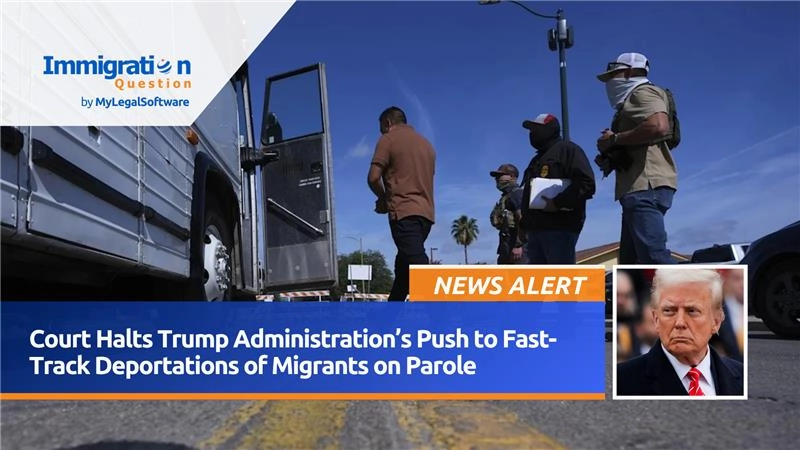
A federal judge has blocked the Trump administration from carrying out fast-tracked deportations of migrants paroled into the U.S. under prior humanitarian programs. The court ruled that removing parolees without due process would cause irreparable harm. It rejected arguments that the president’s enforcement agenda should override constitutional protections.
Federal Judge Blocks Expedited Deportation of Parolees
A U.S. district judge has halted the Trump administration’s attempt to rapidly deport migrants who were granted parole under earlier humanitarian policies, delivering a significant legal setback to the Department of Homeland Security’s current enforcement strategy.
The ruling, issued by Judge Jia Cobb in Washington, D.C., temporarily blocks the administration from applying expedited removal procedures to migrants who entered the country under temporary parole—a category that includes potentially hundreds of thousands of individuals. The decision preserves legal protections for parolees while litigation over the policy continues.
Court Rejects DHS Justification for Accelerated Removals
The Department of Homeland Security had argued it possessed broad authority to deport noncitizens without hearings if they lacked permanent immigration status. Under the Trump administration’s directive, immigration judges had begun dismissing cases involving parolees, allowing Immigration and Customs Enforcement (ICE) to initiate swift removals without court review or legal counsel.
Judge Cobb rejected that justification, stating such procedures risked violating the constitutional rights of parolees. “This court will not endorse the radical proposition that the President is harmed, irreparably, whenever he cannot do something he wants to do—even if what he wants to do is break the law,” Cobb wrote.
The court emphasized that public interest lies in upholding due process, not in removing individuals without proper review.
Advocacy Groups Cite Relief for Vulnerable Migrants
Three immigrant rights organizations brought the legal challenge on behalf of parolees targeted for deportation under the new expedited removal framework. The groups argued the administration’s actions had created fear and legal uncertainty among migrants who had been lawfully paroled under the previous administration.
Ama Frimpong, legal director at CASA, one of the plaintiff organizations, said the ruling brings relief to migrants who had faced imminent deportation.
DHS Denounces Ruling, Weighs Appeal
DHS officials strongly criticized the ruling. Spokesperson Tricia McLaughlin said the department remains committed to enforcing immigration law and called the court’s intervention “lawless.” She argued the decision ignored Supreme Court precedent supporting expedited removals.
McLaughlin added that DHS is reviewing legal options, signaling the administration may appeal the ruling to reinstate the policy. The now-paused policy would allow DHS to bypass immigration proceedings for parolees, enabling deportation without hearings or attorneys.
Enforcement Practices Face Renewed Scrutiny
In recent months, ICE has increased arrests of parolees at courthouses, following moves by immigration judges to terminate pending cases, clearing the way for expedited removal. Immigrant advocates said the administration had used procedural tactics to deny migrants their day in court and fast-track deportations.
The court’s decision has halted those efforts for now. At the same time, broader legal questions around the scope of DHS enforcement powers remain unresolved. Analysts say the outcome of this case could influence how aggressively future administrations can pursue deportations without new congressional authority.
Legal Outlook and Policy Implications
As the litigation continues, the court’s injunction serves as a limit on the administration’s attempt to change deportation policy through executive action. Supporters of the ruling see it as a protection of constitutional principles. In contrast, immigration hardliners warn it could restrict the federal government’s ability to manage increasing backlogs and unauthorized populations.
The case highlights the legal and political tensions surrounding humanitarian parole, due process, and executive enforcement authority. While the court has temporarily blocked removals, the broader legal battle over how far presidential power extends in immigration enforcement continues.
For timely updates and analysis on immigration enforcement and related immigration issues, visit ImmigrationQuestion.com. Get answers to your immigration questions from licensed immigration attorneys. For attorneys, use our innovative 2-in-1 case management software to grow your practice. Download our free app on Google Play and the Apple App Store.
Resources:
- https://www.reuters.com/legal/government/judge-blocks-trump-fast-tracking-deportations-immigrants-paroled-into-us-2025-08-01/
- https://apnews.com/article/immigration-raids-aclu-lawsuit-los-angeles-trump-3bbcb0634ed57ede1897c89f76676094
- https://www.nbcnews.com/news/us-news/appeals-court-keeps-place-restrictions-immigration-stops-l-based-langu-rcna222611
- https://abcnews.go.com/US/appeals-court-upholds-restrictions-los-angeles-immigration-arrests/story?id=124303985
**ImmigrationQuestion.com is a third-party platform that serves as a meeting ground for licensed immigration attorneys and people with immigration questions. It is not a law firm. It is not affiliated with or endorsed by USCIS or AILA. Attorneys on this platform are independent and have the discretion to offer a free consultation and/or set their fees under the law.