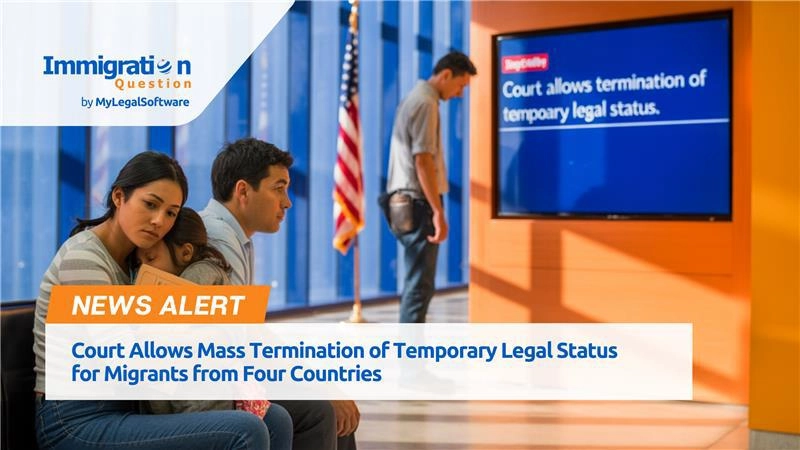
The Supreme Court has allowed the Trump administration to end temporary legal protections for over 500,000 migrants from Cuba, Haiti, Nicaragua, and Venezuela, exposing them to deportation. The decision, opposed by two justices, intensifies uncertainty for immigrants relying on humanitarian parole amid ongoing legal challenges.
Court Clears Way to Strip Humanitarian Parole Protections
The U.S. Supreme Court has permitted the Trump administration to revoke temporary legal protections from more than 500,000 migrants from Cuba, Haiti, Nicaragua, and Venezuela. This decision lifts a lower court’s injunction that had kept humanitarian parole protections in place, potentially exposing nearly one million immigrants to deportation when combined with a separate ruling affecting Venezuelan migrants. The court issued the order without explanation, a common practice for emergency docket decisions, with Justices Ketanji Brown Jackson and Sonia Sotomayor dissenting.
Background on the Humanitarian Parole Program
The humanitarian parole program, initiated under the Biden administration, allowed migrants fleeing turmoil in their home countries to enter the U.S. legally for a period of two years, provided they had a financial sponsor. Over 530,000 people have benefited from this program since late 2022. The Trump administration’s move to end these protections en masse marks the first large-scale revocation of humanitarian parole in U.S. history, described by immigrant advocates as the largest mass illegalization event in modern times.
Legal Battle and Appeals
The administration appealed to the Supreme Court after a federal judge, Indira Talwani, in Boston, blocked its attempt to terminate the program prematurely. Talwani ruled that ending the protections abruptly would force migrants to either leave the country or face deportation. While she allowed parole revocation on a case-by-case basis, the administration argued that the program was granted en masse and should be ended similarly to expedite removals. The Supreme Court’s order means the protections will not remain in place while the legal case continues, returning the matter to the 1st U.S. Circuit Court of Appeals.
Impact on Migrants and Communities
The ruling has sparked alarm among immigrant advocates who warn of widespread chaos and devastation for affected migrants, their families, workplaces, and communities. Justice Jackson’s dissent highlighted the human cost, stating that the decision allowed the lives of half a million migrants to unravel before their legal claims were resolved. The migrants face “two unbearable options” — to flee the U.S. or risk losing everything by staying without legal status.
Political Context and Trump’s Immigration Agenda
President Donald Trump campaigned on deporting millions and has actively sought to dismantle Biden-era immigration policies that expanded legal pathways for migrants. The administration has also spread false claims about Haitian immigrants during political debates, fueling tensions. The Supreme Court’s decision aligns with Trump’s broader immigration crackdown, although the court has ruled against him in other related cases.
Justice Department’s Rationale and Argument
The Justice Department has maintained that these humanitarian parole programs, while well-intentioned, overstep executive authority and undermine established immigration law. They contend that allowing migrants to enter and remain in the U.S. through humanitarian parole without proper adherence to existing immigration procedures strains resources, compromises border security, and incentivizes further irregular immigration. The Solicitor General argued that addressing each case individually, as suggested by the lower court, would be a gargantuan task that would significantly impede the administration’s ability to enforce immigration laws and press for the removal of individuals deemed ineligible to remain in the country.
What’s Next?
As the legal battle continues, the Supreme Court’s temporary ruling allows the Trump administration to proceed with revoking parole protections, increasing uncertainty for hundreds of thousands of migrants. The outcome of the case will have significant implications for U.S. immigration policy, humanitarian protections, and the lives of vulnerable immigrant populations.
To stay up-to-date and informed, visit our news page, ask your immigration questions on Immigration Question, and get responses from licensed attorneys. For attorneys, streamline your case and lead management when you download the Immigration Question app.