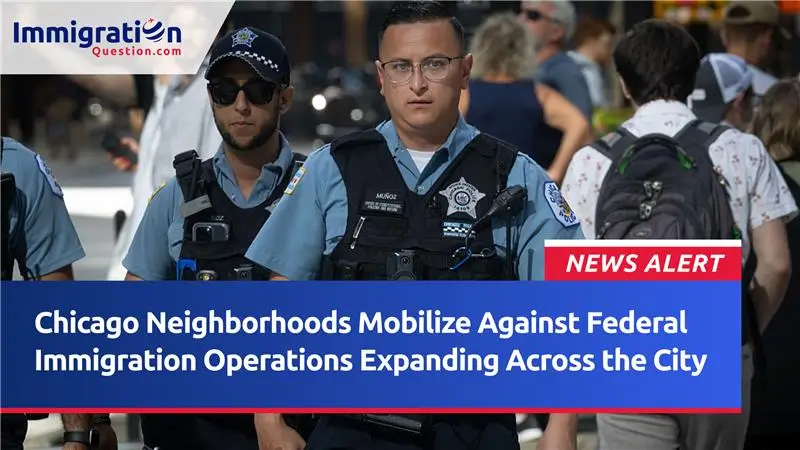
Chicago residents are mounting an organized and obvious response to the Trump administration’s immigration crackdown. Community patrols, whistle alerts, school escorts, and coordinated neighborhood efforts have emerged across the city, creating a model that activists in other regions hope to adopt as federal immigration operations expand, and local tensions rise.
Community Patrols and Whistle Alerts
Across Little Village, daily patrols have become a routine feature of neighborhood life as residents prepare for additional federal immigration activity. Activist Baltazar Enriquez starts his mornings by watching for unmarked vehicles and more agents in the area. He encourages his neighbors to stay alert and report any signs of enforcement operations. His outreach, boosted online, has strengthened the community’s rapid-response networks.
The whistle alert system has become one of Chicago’s most visible tools for neighborhood defense. When whistles sound, residents come together to document interactions between immigration agents and community members. They create records and provide support for those involved. These actions have sometimes resulted in tense confrontations, which include the use of tear gas, rubber bullets, and physical force by federal officers. Neighborhoods citywide now host “Whistlemania” events to distribute whistles and encourage broader participation.
Grassroots Organizing Across the City
Chicago’s response builds on long-standing traditions of neighborhood collaboration. Residents have utilized extensive community networks to rapidly spread information and provide support to families where enforcement activities have increased. In fact, these networks have become increasingly organized as local groups develop systems for monitoring agent movements and coordinating volunteers.
School escort programs have also expanded, especially in Little Village, where walking groups now support growing numbers of students. Bicycle advocacy groups have also stepped in to support vendors targeted by immigration agents, coordinating rides to purchase inventory and reduce vendors’ visibility. Local businesses and mutual aid groups continue to provide groceries, transportation help, and other resources to residents who are hesitant to leave their homes.
Federal Tactics and Local Pushback
Federal officials say they’ve made more than 3,200 arrests in Chicago under Operation Midway Blitz, calling the environment ‘difficult to operate in’ due to large crowds and sanctuary protections. Community members point to recordings that show forceful or chaotic encounters during enforcement actions, which raise concerns about oversight. Several protesters and U.S. citizens have also been detained, prompting more public scrutiny.
Officials overseeing the operation describe Chicago as a challenging environment because of strong community mobilization. Federal authorities have stated that similar enforcement surges are underway in regions including Charlotte, North Carolina. In Chicago, ongoing lawsuits continue to challenge federal enforcement practices and seek expanded court oversight as tensions persist.
Growing National Interest
Chicago’s model has attracted attention from community groups across the country that are getting ready for possible enforcement increases. Organizations in states like Oregon and Missouri have requested posters, materials, and training advice to create similar programs in their own communities. National pro-democracy groups also report increased participation in “know-your-rights” sessions, reflecting Chicago’s example.
Organizers emphasize that the model’s appeal stems from its focus on community, visibility, and flexibility. As federal immigration efforts expand, Chicago’s approach is being looked at as a model for coordinated action elsewhere.
A Look Ahead
The coordinated efforts in Chicago may continue to influence how other cities approach immigration enforcement. Moving forward, there are also legal battles that could shape future interactions between immigration agents and residents.
ImmigrationQuestion.com will track enforcement trends, community responses, and changes affecting immigrant families across the nation.
For continued coverage and in-depth analysis of U.S. immigration policy and visa reforms, visit ImmigrationQuestion.com.
Get answers to your immigration questions from licensed immigration attorneys. For attorneys, use our innovative 3-in-1 case management software to improve your practice. Download our free app on Google Play and the Apple App Store.
Resources:
**ImmigrationQuestion.com is a networking platform founded by Immigration Attorneys. It serves as a meeting ground for licensed immigration attorneys and people with immigration questions. It is not a law firm. It is not affiliated with or endorsed by USCIS or AILA. Attorneys on this platform are independent and have the discretion to offer a free consultation and/or set their fees under the law.