
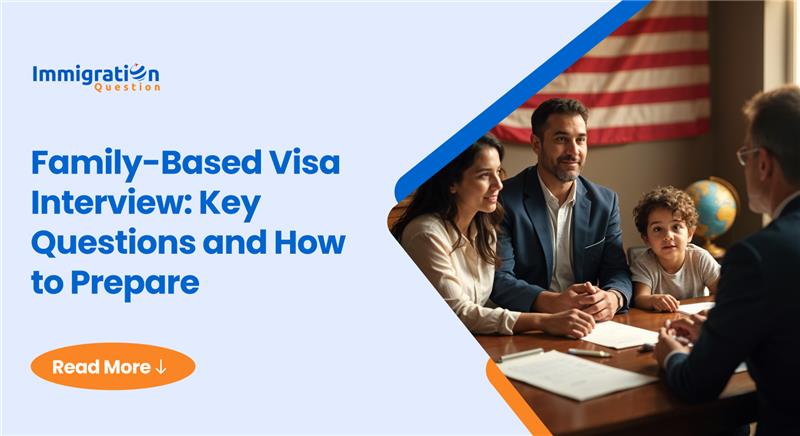
Family-based immigration lets eligible U.S. citizens and lawful permanent residents sponsor certain relatives for an immigrant visa or green card. This guide is for sponsors and family members who want a clear view of eligibility, visa categories, required documents, and family-based visa interview questions.
It explains what officers typically assess and how to prepare, but requirements vary by relationship and personal history.
Immigration rules and interview practices can change, so review current official instructions before filing or attending an interview.
Quick Answer: What Is Family-Based Immigration?
Family-based immigration is a legal sponsorship pathway that helps qualifying relatives reunite in the United States.
- Allows citizens or permanent residents to sponsor relatives
- Prioritizes immediate family members
- Includes preference categories with annual limits
- Requires proof of relationship and financial support
- Often involves a visa interview
- Focuses on admissibility and eligibility
- Designed to reunite families legally
Family-based immigration is a sponsorship system where a qualifying relative in the U.S. files a petition to prove the family relationship and request immigration processing. U.S. citizens can generally sponsor more types of relatives than permanent residents.
The case is then reviewed for eligibility, relationship evidence, and admissibility, and it may proceed through consular processing or a U.S.-based process depending on where the applicant is located.
Who Is Eligible for a Family-Based Visa?
Eligibility depends on the sponsor’s status and the specific family relationship.
Immediate Relatives of U.S. Citizens
- Spouses of U.S. citizens
- Unmarried children under 21
- Parents of U.S. citizens (petitioner must be 21+)
Family Preference Categories
- F1: Unmarried adult children of U.S. citizens
- F2A: Spouses and unmarried children under 21 of permanent residents
- F2B: Unmarried adult children of permanent residents
- F3: Married children of U.S. citizens
- F4: Siblings of U.S. citizens
Documents Required for Family-Based Immigration
Accurate, complete documents help your interview answers match the record.
- Valid passport
- Completed visa application forms
- Passport photographs
- Proof of relationship (birth and marriage certificates)
- Financial support evidence
- Travel or accommodation details
What Happens During a Family-Based Visa Interview?
A family-based visa interview verifies identity, confirms the relationship, and reviews eligibility and admissibility.
- Role of the consular or USCIS officer: Reviews your file and asks focused questions.
- Verification of documents: Checks completeness and consistency.
- Relationship assessment: Looks for credible details that match the petition.
- Eligibility and admissibility review: Screens for issues that could block approval.
Personal Information Questions in a Family-Based Visa Interview
Personal information questions confirm basic identity and background.
- What is your full name and date of birth?
- Where were you born?
- What is your nationality?
- Where do you currently live?
- Do you have any dependents?
- Are you fluent in English?
Relationship Questions in Family-Based Immigration Interviews
Relationship questions test whether the claimed relationship is real and supported by evidence.
- What is your relationship with the petitioner?
- How and when did you meet?
- How often do you communicate?
- Can you provide proof of the relationship?
Questions About Your Plans After Immigrating
Plans questions check whether your post-arrival plan is clear and consistent.
- Why do you want to live in the U.S.?
- Where will you live?
- Do you plan to work or study?
- Do you intend to return to your home country?
Immigration History Questions in Family-Based Interviews
Immigration history questions review prior applications and compliance.
- Have you applied for a U.S. visa before?
- Have you ever been denied a visa?
- Have you visited the U.S. previously?
- Have you lived in other countries?
- Have you ever been deported?
Admissibility Questions in Family-Based Immigration
Admissibility questions identify issues that may affect approval.
- Do you have a criminal record?
- Do you have any serious medical conditions?
- Are there changes to your eligibility since filing?
Common Reasons Family-Based Visas Are Denied
Denials often involve missing proof, credibility concerns, or admissibility problems.
- Misrepresentation or false information
- Inconsistent interview answers
- Insufficient proof of relationship
- Financial sponsorship issues
- Admissibility problems
How to Prepare for Family-Based Visa Interview Questions
Preparation is about organization and consistency.
- Review the application so names, dates, and relationship details match
- Organize documents and bring originals if required
- Practice common questions, especially relationship timelines
- Be honest and consistent, and do not guess
- Seek professional guidance if needed
Key Takeaways
- Family-based immigration allows eligible sponsors to petition for qualifying relatives.
- Immediate relatives and preference categories follow different category rules and limits.
- Interviews verify identity, relationship evidence, and admissibility.
- Accurate documents and consistent answers reduce avoidable delays.
For more immigration guidance and resources, visit ImmigrationQuestion.com.
Frequently Asked Questions
- What is family-based immigration in the United States?
Family-based immigration is a legal process where a U.S. citizen or permanent resident sponsors a qualifying relative. The relationship determines the category and the evidence required. - Who is eligible to sponsor a family member for immigration?
U.S. citizens and lawful permanent residents can sponsor certain relatives, but eligible relatives differ by sponsor status. Many cases also require showing adequate financial support. - Which relatives qualify for family-based immigration petitions?
Qualifying relatives may include spouses, children, parents, and in some cases siblings, depending on the sponsor’s status. Category definitions control eligibility. - What is the difference between immediate relatives and family preference categories?
Immediate relatives are close family members of U.S. citizens, such as spouses, unmarried children under 21, and parents. Preference categories have annual limits, which can increase wait times. - How long does the family-based immigration process take?
Timelines vary by category, country, case completeness, and agency workload. Preference categories can take longer because of annual limits. - What forms are required for family-based immigration?
Forms depend on your process path and case stage, but family petitions and immigrant visa or adjustment forms are common. Always follow the current form instructions for your category. - What is the role of Form I-130 in family-based immigration?
Form I-130 is commonly used to establish the qualifying family relationship. If approved, it usually allows the case to move forward to further processing. - Can a family member work or travel while their application is pending?
Work or travel depends on the applicant’s current status and location, and any separate permissions available during processing. Some applicants may qualify for interim authorization, while others must wait.