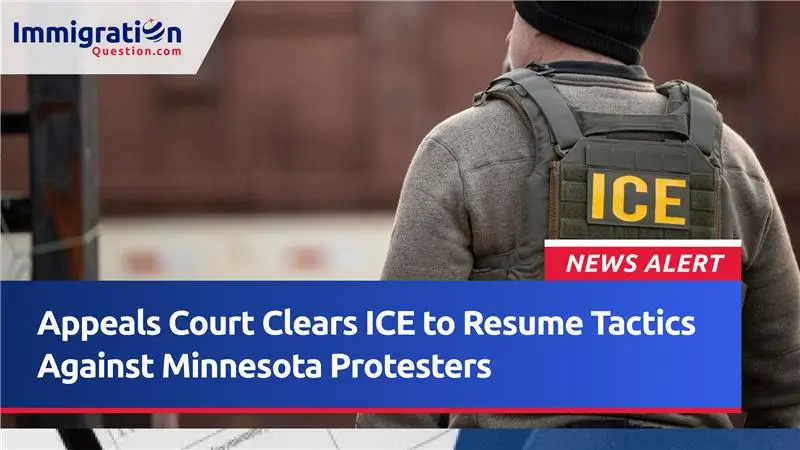
A federal appeals court has lifted restrictions that limited how immigration agents could respond to protesters in Minnesota, allowing federal officers broader authority as legal challenges continue. The ruling comes amid escalating tensions over large-scale immigration enforcement operations in Minneapolis and St. Paul.
Appeals Court Pauses Restrictions on Immigration Agents
A U.S. appeals court has blocked a lower court order that previously restricted immigration agents from arresting or using crowd-control tactics against peaceful protesters in Minnesota.
The decision temporarily restores broad enforcement authority while judges consider whether to reinstate or permanently halt the earlier limits.
The ruling impacts federal operations in Minneapolis and St. Paul, where immigration enforcement has increased despite pushback from state and local leaders.
Legal Battle Over Protest Rights and Enforcement Powers
Activists filed the lawsuit, claiming that federal agents violated constitutional rights by detaining demonstrators and interfering with those observing immigration operations.
A district court initially agreed and issued an injunction to protect nonviolent protesters and bystanders.
Federal officials appealed the ruling, arguing that restrictions interfered with immigration enforcement duties. The appeals court decision pauses the injunction while the case moves forward.
Tensions Rise Amid Expanding ICE Presence
Minnesota has seen a sharp increase in immigration enforcement activity, with thousands of ICE and Border Patrol agents deployed across the Twin Cities. While many protests have stayed peaceful, encounters between residents and federal officers have risen in recent weeks.
Public concern grew after incidents involving mistaken arrests and the fatal shooting of a civilian during enforcement activities, leading to greater scrutiny of federal tactics and accountability.
Warrant Authority and Home Entry Under Scrutiny
The legal conflict has also highlighted internal guidelines that allow immigration agents to use administrative warrants to enter private homes. Civil liberties advocates argue that these practices raise significant constitutional issues, especially when arrests happen without judicial warrants.
Challenges to these enforcement practices may arise in future court cases, particularly where detainees claim violations of Fourth Amendment rights.
Federal and State Standoff Deepens
Minnesota officials have initiated separate legal actions to limit federal immigration operations, arguing that enforcement methods have put residents at risk and exceeded legal boundaries. Meanwhile, the federal government defends its actions as necessary for enforcing immigration laws and ensuring public safety.
The growing standoff has escalated into a broader political and legal conflict, with investigations and subpoenas putting additional strain on federal-state relations.
Looking Ahead
The appeals court is expected to decide whether to permanently lift or reinstate restrictions on immigration agents’ conduct during protests.
ImmigrationQuestion.com will continue monitoring court rulings, enforcement policies, and legal challenges affecting protest rights and immigration operations nationwide.
Visit ImmigrationQuestion.com for continued monitoring of developments related to DHS Regulations, TPS, immigration enforcement operations, investigations into the use of force, and policy impacts on immigrant communities.
Get answers to your immigration questions from licensed immigration attorneys. For attorneys, use our innovative 3-in-1 case management software to improve your practice. Download our free app on Google Play Store and the Apple App Store.
Resources
**ImmigrationQuestion.com is a networking platform founded by Immigration Attorneys. It serves as a meeting ground for licensed immigration attorneys and people with immigration questions. It is not a law firm. It is not affiliated with or endorsed by USCIS or AILA. Attorneys on this platform are independent and have the discretion to offer a free consultation and/or set their fees under the law.