The U.S. federal government is preparing a significant expansion of immigration enforcement operations in 2026, marking one of the most aggressive enforcement pushes in recent years. The planned expansion comes with billions in new funding for enforcement agencies, even as political and public resistance to the strategy grows ahead of the 2026 midterm elections.
Broad Enforcement Strategy Planned for Next Year
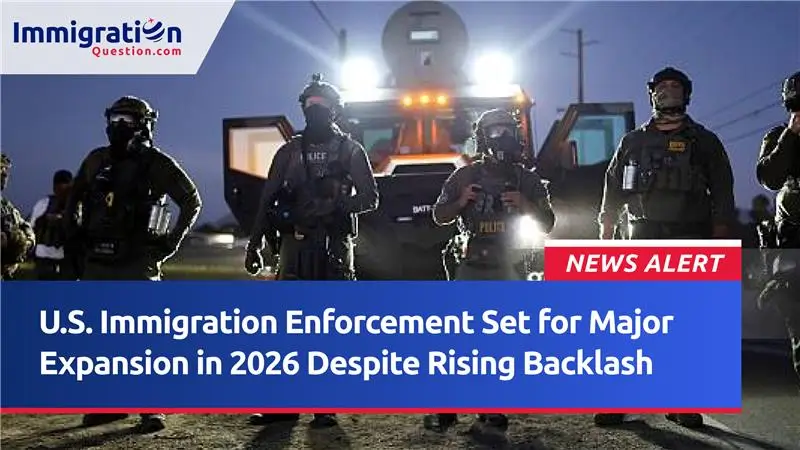
President Donald Trump’s administration is gearing up for a much broader immigration crackdown in 2026 that would scale up interior enforcement and deepen federal government involvement across the country. The expansion follows the passage of a major Republican-backed federal spending bill this year that included roughly $170 billion in additional funding for U.S. Immigration and Customs Enforcement (ICE) and the U.S. Border Patrol through fiscal year 2029.
Officials involved in planning say the new funding is intended to support the hiring of thousands more federal agents, opening new detention facilities, increasing workplace enforcement, and partnering with external contractors to help track down individuals suspected of being in the country without legal status. Enforcement actions are expected to move beyond border regions and major metro raids to include deeper workplace and community operations.
In public statements, administration officials have emphasized that the focus of these enforcement efforts remains on removing individuals they describe as posing public safety or national security risks. However, recent enforcement campaigns have drawn scrutiny for their breadth and intensity.
Backlash Grows Ahead of 2026 Midterms
Despite federal assertions about targeting criminal activity, public and political backlash has grown in many parts of the country. Critics of the enforcement push say that aggressive immigration raids and broad detention authority have strained community relations, raised due process concerns, and drawn criticism from civil liberties advocates.
Political fallout has already appeared in local elections. For example, Miami, a city with a large immigrant population that has seen high levels of enforcement activity, recently elected its first Democratic mayor in nearly three decades, with some local analysts attributing part of that shift to voter concerns over federal immigration tactics.
Political strategists and analysts quoted in reporting note that many voters now view enforcement actions not only as an immigration policy question but also as a broader issue of civil liberties and government overreach, potentially complicating Republican messaging in key districts and states.
Enforcement Tactics and Broader Impact
The planned crackdown builds on operations carried out throughout 2025. Federal immigration agents have conducted visible enforcement activities in multiple U.S. cities, sweeping through neighborhoods and workplaces in search of individuals suspected of immigration violations. While earlier in the year many workplace and employer raids were limited, the expanded strategy for 2026 signals a return to these tactics at greater scale.
ICE and Border Patrol officials are reportedly considering placing additional emphasis on workplace enforcement next year; a shift that immigration lawyers warn could have significant economic implications. Employers historically targeted for hiring unauthorized workers could face increased federal scrutiny, while workers, including those with legal status, may feel heightened anxiety around routine employment checks or audits.
Civil liberties advocates continue to raise concerns about enforcement methods, including the detentions of individuals without serious criminal records and the aggressive use of federal agents in urban settings. These critics argue that such broad approaches risk undermining trust in both immigration authorities and local law enforcement partners, and could have lasting social impacts in immigrant communities.
Looking Ahead
As 2026 approaches, federal immigration policy appears poised for an intensified enforcement phase with new resources and broader operational mandates. The Trump administration’s strategy of expanding workplace raids, adding enforcement personnel, and increasing detention capacity is likely to keep immigration at the forefront of political debate in the United States.
To learn more about recent U.S. immigration policy developments, visit ImmigrationQuestion.com, a meeting ground for individuals seeking clarity on U.S. immigration policy.
Get answers to your immigration questions from licensed immigration attorneys. For attorneys, use our innovative 3-in-1 case management software to improve your practice. Download our free app on Google Play Store and the Apple App Store.
Resources:
https://www.ariananews.af/trump-plans-expanded-immigration-crackdown-in-2026-despite-backlash/
https://www.newsmax.com/politics/trump-immigration-crackdown/2025/12/22/id/1239247/
ImmigrationQuestion.com is a networking platform founded by Immigration Attorneys. It serves as a meeting ground for licensed immigration attorneys and people with immigration questions. It is not a law firm. It is not affiliated with or endorsed by USCIS or AILA. Attorneys on this platform are independent and have the discretion to offer a free consultation and/or set their fees under the law.