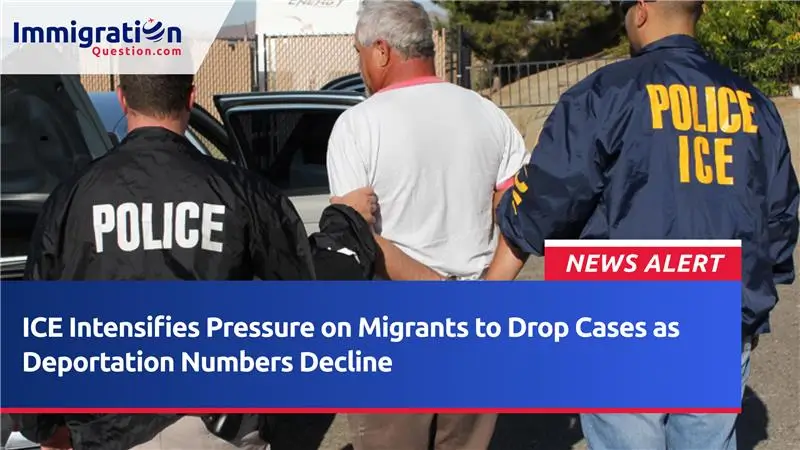
As federal deportation numbers drop below the administration’s targets, immigration officers are putting more pressure on detained migrants to drop their legal claims. Attorneys say they are increasingly using threats, prolonged detention, and warnings of family separation.
Escalation in Tactics as Deportation Numbers Lag
With deportation goals falling short of initial projections, immigration authorities have stepped up efforts to convince detainees to end their cases. There appears to be a reliance on threats of prosecution, more extended detention, and family separation to encourage compliance with a removal order, based on data gathered from migrants, attorneys, and former officials.
One case involves Kelly and Yerson Vargas, a Colombian couple detained in Texas. Despite having filed applications claiming they were victims of human trafficking, officers warned them they could face criminal charges and be separated from their young daughter if they continued to fight their deportation. They ultimately agreed to return to Colombia.
Legal Tools Used More Aggressively
Federal officers have started using seldom-used laws that allow for criminal charges if individuals do not comply with deportation orders. These laws have been on the books for decades, but were rarely utilized in past administrations. Now, they are cited in removal proceedings with increasing regularity.
The authorities claim that all this is done within their rights. The lawyers and advocates say that it all affects due process, particularly for those with a pending humanitarian application that allows them to remain in this country while their cases are in process.
Detention Increases Contribute to Case Abandonment
Immigration detention levels have expanded sharply, with nearly 66,000 individuals held nationwide by late 2025. Before these changes, migrants without criminal histories frequently secured release while awaiting court hearings. A shift in federal policy this summer argued that most detainees were ineligible for bond.
Although a federal court blocked the policy in November, many detainees had already concluded that prolonged, uncertain confinement was not sustainable. Some ultimately withdrew their claims, while others accepted removal to countries where they had little or no connection.
Voluntary Departures Rise Under Current Policies
Federal data show a significant increase in migrants opting for voluntary departure. This process allows individuals to leave the United States without facing the long-term consequences of formal deportation. In the first eight months of 2025, court-approved voluntary departures for detainees rose more than five times compared to the same period the year before.
Lawyers report that some migrants accepted removal after being informed they could be transferred to third countries where they had no ties and where detention risks were reported. Migrants from Guatemala, Venezuela, Ecuador, Mexico, Honduras, and Brazil were among those who chose departure despite family ties, long-term residence, or pending applications.
Human Impact Shapes Decisions in Detention Facilities
Accounts from detention centers describe crowded living conditions, limited access to legal support, and fears of extended confinement. Some detainees say they chose removal to get away from worsening conditions in facilities. Others feared being transferred to countries where they might face imprisonment or instability.
Many migrants have left the United States, hoping that future visa opportunities would allow them to return legally. Others returned to countries where their safety and long-term prospects remain uncertain. This indicates the tough decisions they needed to make owing to the prevailing enforcement conditions.
What’s Next?
The courts are likely to continue analyzing detention policies, threats made by prosecutors, and voluntary departures as federal enforcement policies continue to evolve. There are expectations of further analysis of how due process, cases, and the stability of the immigration system are impacted.
For continued updates, detailed policy tracking, and community discussions, visit ImmigrationQuestion.com, a meeting ground for individuals seeking clarity on U.S. immigration policy.
Get answers to your immigration questions from licensed immigration attorneys. For attorneys, use our innovative 3-in-1 case management software to improve your practice. Download our free app on Google Play Store and the Apple App Store.
Resource
**ImmigrationQuestion.com is a networking platform founded by Immigration Attorneys. It serves as a meeting ground for licensed immigration attorneys and people with immigration questions. It is not a law firm. It is not affiliated with or endorsed by USCIS or AILA. Attorneys on this platform are independent and have the discretion to offer a free consultation and/or set their fees under the law.