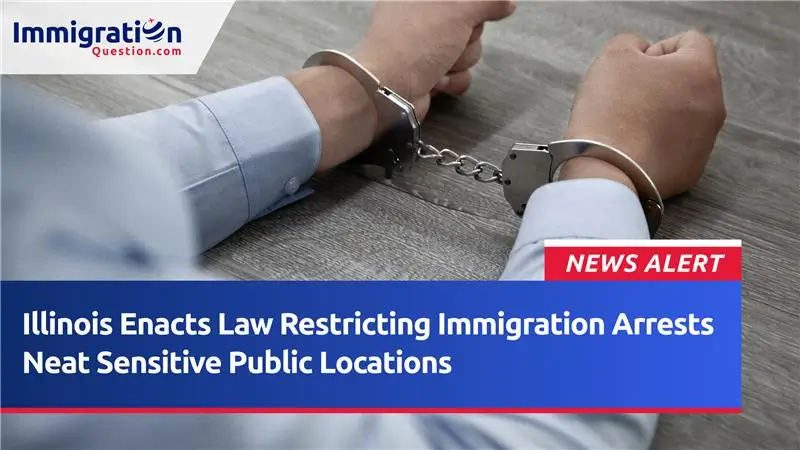
Illinois has adopted a new law restricting federal civil immigration arrests in sensitive public areas, including courthouses, hospitals, university campuses, and day care centers. The measure responds to heightened enforcement operations in the state. It introduces penalties, privacy protections, and new procedures for individuals affected by unlawful immigration actions.
State Strengthens Protections Following Expanded Federal Enforcement
Illinois residents now have broader safeguards limiting where federal civil immigration arrests may occur. Governor JB Pritzker immediately signed the law. It applies to places like medical facilities, courthouses, colleges, and day care centers. This measure follows a period of heightened federal enforcement across the state. Large-scale operations caused considerable public concern.
Lawmakers introduced the legislation after reports that enforcement actions discouraged individuals from seeking health care, attending classes, or appearing in court. The law also provides for a mechanism for the people to seek redress in case their constitutional rights have been violated during federal enforcement in Chicago. This includes the ability to seek financial damages when an arrest occurs unlawfully in connection with a court appearance.
Civil Penalties and Operational Limits Detailed Under New Statute
The law prohibits federal officers from conducting civil immigration arrests in or near courthouses when a person is present for specific legal proceedings. Violations may trigger penalties, including up to $10,000 in damages for unlawful arrests that require court attendance. These provisions aim to ensure uninterrupted access to the judicial system without the fear of immigration detention.
Additional measures improve confidentiality protections across key institutions. Hospitals cannot release private medical information for immigration purposes. Universities cannot act on the immigration status of their students or staff, nor can day care centers release similar information. According to advocates, these protections are a key mechanism that fosters trust in using public services and reduces barriers to accessing critical assistance.
Federal Response and Anticipations of Judicial Review
Some federal officials have voiced concerns that the law may clash with federal authority over immigration. Observers expect these objections could lead to court challenges, especially as questions arise about how the law relates to broader enforcement powers and federal laws governing immigration actions.
Illinois legislative leaders acknowledge the risk of legal scrutiny but insist that the statute complies with constitutional principles. They noted that previous disagreements between state governments and federal agencies have often been resolved through litigation and anticipate similar litigation over the enforcement limits outlined in the new law.
Community Organizations Highlight Impact on Public Safety and Stability
Groups working with immigrant families hailed the measure, adding that it was crucial to ensure residents can access health care, educational facilities, and judicial services safely. They believe that if the arrest factor is minimal in sensitive places, it would reduce fear, increase cooperation with public institutions, and help stabilize immigrant communities.
Advocacy organizations also point out that, as written, the law supports statewide efforts at building trust between public agencies and immigrant residents. They believe it restricts enforcement in areas related to basic life and essential services, representing steps to ensure safety, participation, and transparency in community interactions by the state.
Looking Ahead
Legal challenges are expected as federal and state authorities evaluate the limits of their respective roles. Court decisions in the coming months will likely determine how the law is implemented and shape its longer-term influence on statewide enforcement practices.
To learn more about recent U.S. immigration policy developments, visit ImmigrationQuestion.com, a meeting ground for individuals seeking clarity on U.S. immigration policy.
Get answers to your immigration questions from licensed immigration attorneys. For attorneys, use our innovative 3-in-1 case management software to improve your practice. Download our free app on Google Play Store and the Apple App Store.
Resources
**ImmigrationQuestion.com is a networking platform founded by Immigration Attorneys. It serves as a meeting ground for licensed immigration attorneys and people with immigration questions. It is not a law firm. It is not affiliated with or endorsed by USCIS or AILA. Attorneys on this platform are independent and have the discretion to offer a free consultation and/or set their fees under the law.