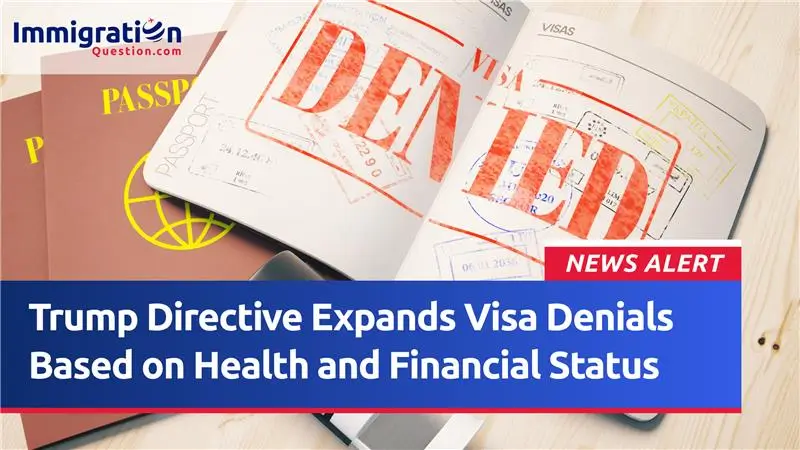
A new rule by the Trump administration may make it more difficult for foreigners to enter the United States if they have certain health conditions or limited financial means. The guidance instructs consular officers to give additional scrutiny to applicants’ medical and financial histories. This has raised concerns about fairness and discretion in visa decisions, as well as potential discrimination.
Trump Administration Broadens Visa Restrictions
A new State Department directive under the President Donald Trump administration is expanding the reasons to deny U.S. visas, with a focus on applicants’ health and financial situations. The policy, detailed in a cable obtained by the Associated Press, instructs U.S. embassies and consulates worldwide to conduct more thorough evaluations of visa applicants’ self-sufficiency.
The directive redefines the “public charge” standard. This aspect of immigration law enables the government to deny entry or permanent residency to individuals who are likely to rely on public benefits. This change reflects a return to Trump-era immigration strategies aimed at limiting entry for those viewed as financially or medically burdensome to the U.S.
Stricter Medical and Financial Criteria
The new regulations mandate “more stringent medical and financial screenings” of applicants. Consular officers are advised to consider “whether a medical condition of an alien, including but not limited to, obesity, diabetes, cardiovascular disease, neurological disorder, or mental health disorder, is likely to result in high medical costs.
There is also more financial scrutiny.
Applicants are expected to provide detailed evidence of assets, which should include bank records, savings, trust funds, and retirement accounts, to show long-term financial independence. The cable also allows officers to consider English proficiency during interviews when determining an applicant’s ability to integrate economically.
According to the State Department, these steps are designed to ensure that immigration policies “protect the American taxpayer” by limiting public benefit dependency.
Global Impact and Policy Reach
Immigration policy analysts say the directive could have sweeping global implications, potentially reducing the number of approved visa applications. The change could particularly impact older adults, low-income individuals, and applicants with chronic medical conditions.
The Trump administration has reinstated a set of stringent immigration measures for various visa categories. Experts warn that this directive grants broad interpretive power to consular officers, resulting in inconsistent application from one embassy to another.
While the State Department clarified that the guidance mainly applies to immigrant visas, advocacy groups say the effects could also reach non-immigrant applicants, such as relatives of U.S. residents seeking to visit or reunite with family members.
Criticism and Legal Questions
The action is being criticized by immigrant rights advocates and policy experts for its broadness, without considerable clarity. They caution that the changes could deter immigrants and mixed-status families from seeking health care or other assistance programs, as they fear they may jeopardize future eligibility for certain visas.
The new policy has also brought about debate over executive authority in immigration enforcement. Legal observers argue that by expanding the definition of “public charge” beyond what Congress intended, the administration may overstep its legal bounds. Immigration attorneys anticipate potential legal challenges, especially if the new rules for rejecting visa applications appear arbitrary or discriminatory.
Looking Ahead
The directive will likely impact visa processing for several months as embassies and consulates adjust to the new standards. Immigration advocacy organizations are watching its implementation closely for any signs of unfair outcomes or excessive denials.
For continued coverage and in-depth analysis of U.S. immigration policy and visa reforms, visit ImmigrationQuestion.com.
Get answers to your immigration questions from licensed immigration attorneys. For attorneys, use our innovative 3-in-1 case management software to improve your practice. Download our free app on Google Play and the Apple App Store.
Resources:
**ImmigrationQuestion.com is a networking platform founded by Immigration Attorneys. It serves as a meeting ground for licensed immigration attorneys and people with immigration questions. It is not a law firm. It is not affiliated with or endorsed by USCIS or AILA. Attorneys on this platform are independent and have the discretion to offer a free consultation and/or set their fees under the law.