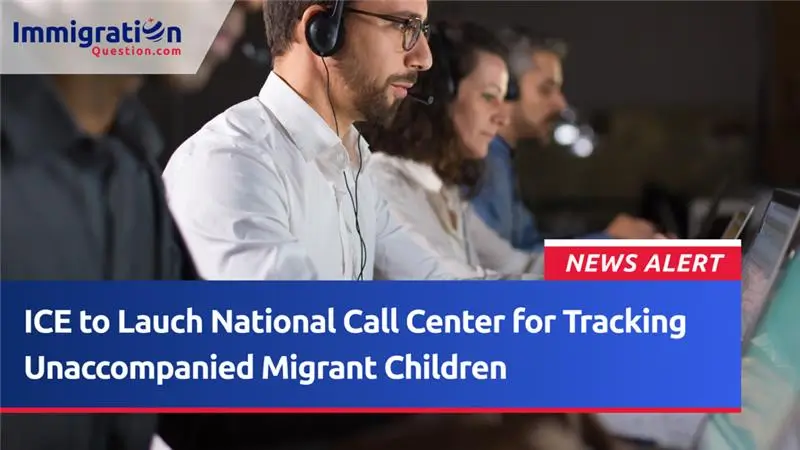
U.S. Immigration and Customs Enforcement (ICE) plans to open a national call center to assist law enforcement in locating unaccompanied migrant children who enter the U.S. illegally. The initiative is part of the Trump administration’s expanded immigration enforcement efforts, which include intensified monitoring of sponsors and new detainee transport programs.
New Call Center to Aid Law Enforcement
ICE is establishing a 24/7 national call center in Nashville, Tennessee, to help local and state law enforcement locate unaccompanied migrant children. Federal contracting documents indicate the facility will handle 6,000 to 7,000 daily calls and aims to be fully operational by June, with an initial opening targeted for the end of March.
The agency is seeking vendors to provide the technology, personnel, and resources necessary to maximize call efficiency. ICE describes the center as an integral part of a broader enforcement strategy implemented by the Trump administration.
Officials say the call center will act as a central hub for sharing information and providing real-time support. This setup will allow law enforcement agencies to report sightings, confirm custody arrangements, and manage transfers to federal or state custody when needed.
Transport Programs and Expanding Enforcement
ICE is also seeking vendors who can transport thousands of detainees daily across Texas. This effort comes after a new state law that requires all county jails to partner with ICE for managing detainees. Contract documents specify six daily trips transporting roughly 30 detainees under armed guard to one of 36 ICE offices, with vendors expected to establish regional transport hubs within six months of the contract award.
These enforcement expansions come with a $170 billion investment in immigration and border security, following legislation signed by President Trump in July. Besides the call center and transport programs, the administration has stepped up policies targeting unaccompanied minors. This includes stricter checks on sponsors, mandatory DNA testing, fingerprint verification, and tougher deportation procedures.
Background on Unaccompanied Migrant Children
An unaccompanied migrant child is defined as someone under 18 who enters the U.S. without lawful status and without a parent or legal guardian. In recent years, thousands of minors have crossed the southern border. The children are transferred to the Office of Refugee Resettlement by Border Patrol and placed in a network of federal shelters.
Children can later be released to sponsors, usually parents, relatives, or family friends.
The Trump administration has conducted a nationwide review of approximately 450,000 migrant children who crossed during the Biden administration. Advocacy organizations have expressed apprehensions that such scrutiny of the sponsors and rapid deportation measures may jeopardize the safety and well-being of the minors.
Looking Ahead
The new ICE call center and expanded transport operations reflect the toughened approach of the Trump administration to immigration enforcement involving unaccompanied minors. Further integration of the federal law enforcement network and local networks is expected to facilitate the tracking and management of minors across state borders, according to officials.
These initiatives form part of a broader pattern of increased federal oversight and rapid enforcement actions against vulnerable populations, raising questions about the appropriate balance between legal enforcement and humanitarian protection.
For continued coverage on ICE programs, unaccompanied migrant children, and U.S. immigration enforcement, visit ImmigrationQuestion.com. Get answers to your immigration questions from licensed immigration attorneys. For attorneys, use our innovative 3-in-1 case management software to improve your practice. Download our free app on Google Play and the Apple App Store.
Resources:
**ImmigrationQuestion.com is a networking platform founded by Immigration Attorneys. It serves as a meeting ground for licensed immigration attorneys and people with immigration questions. It is not a law firm. It is not affiliated with or endorsed by USCIS or AILA. Attorneys on this platform are independent and have the discretion to offer a free consultation and/or set their fees under the law.