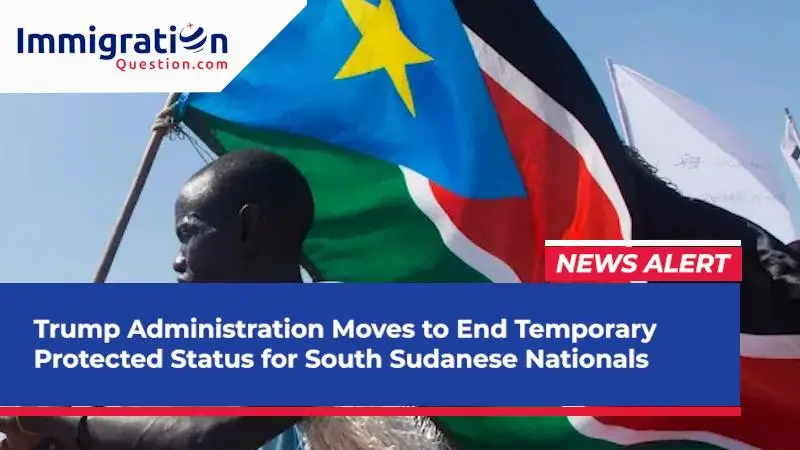
The Department of Homeland Security has announced its intention to terminate Temporary Protected Status for nationals of South Sudan. This decision marks the end of a 14-year period that protected thousands from deportation and allowed them to work legally in the United States. Officials state the choice reflects improved conditions in South Sudan and renewed diplomatic engagement.
DHS Confirms End of South Sudan TPS
The Department of Homeland Security is preparing to publish a formal termination notice in the Federal Register later this week. This notice will officially end TPS protections for South Sudan. Once published, the decision will initiate a 60-day grace period for affected nationals to depart the country, after which they will face removal beginning in January 2026.
According to DHS officials, the review concluded that the conditions prompting the original designation- armed conflict and widespread instability- no longer meet the statutory threshold for designation. The department mentioned improved political stability, regional peace agreements, and South Sudan’s willingness to reintegrate returnees as reasons for the policy change.
Reversal of Longstanding Humanitarian Protection Temporary
Protected Status was first granted to South Sudan in 2011, following years of internal conflicts and displacements. Since then, successive administrations have renewed this policy, which lets eligible nationals live and work legally in the United States.
The decision to end TPS for South Sudan aligns with the administration’s overall goal of reducing temporary humanitarian programs. Critics argue that this move ignores the ongoing instability and humanitarian issues in the region, such as displacement, food insecurity, and sporadic violence.
Humanitarian and Legal Repercussions
Humanitarian organizations and regional analysts are worried that South Sudan’s delicate peace process is at risk. Reports from the United Nations point to ongoing human rights abuses, the recruitment of child soldiers, and civilian deaths from random clashes among armed groups.
Legal advocates warn that the DHS decision could face legal challenges if conditions worsen or if returning nationals encounter credible threats. They argue the agency’s reliance on government assurances from South Sudan may not align with current on-ground realities documented by international monitors.
Guidance for South Sudanese Nationals
DHS estimates that about 5,000 South Sudanese nationals currently have TPS in the United States. Once the termination notice takes effect, these individuals will have 60 days to leave voluntarily, apply for other relief, or face deportation.
The department is urging voluntary departure through the CBP Home app, which it says provides a secure process for self-reporting exit. However, immigrant advocates point out that DHS has not provided any alternative immigration pathways or re-entry options for those who decide to leave.
Broader Implications and Next Steps
The administration’s decision to end South Sudan’s TPS designation happens alongside a broader reassessment of humanitarian protections. Several other countries with longstanding TPS designations are also being reviewed. This suggests a possible tightening of U.S. refugee and relief policy.
Lawmakers and immigrant rights groups are expected to push for oversight hearings, citing the humanitarian risks of forced repatriation to unstable regions. For now, DHS says the decision was based on current facts and national interest.
For ongoing updates on Temporary Protected Status, humanitarian policy, and U.S. immigration developments, visit ImmigrationQuestion.com. Get answers to your immigration questions from licensed immigration attorneys. For attorneys, use our innovative 3-in-1 case management software to improve your practice. Download our free app on Google Play and the Apple App Store.
Resources:
**ImmigrationQuestion.com is a third-party platform that serves as a meeting ground for licensed immigration attorneys and people with immigration questions. It is not a law firm. It is not affiliated with or endorsed by USCIS or AILA. Attorneys on this platform are independent and have the discretion to offer a free consultation and/or set their fees under the law.