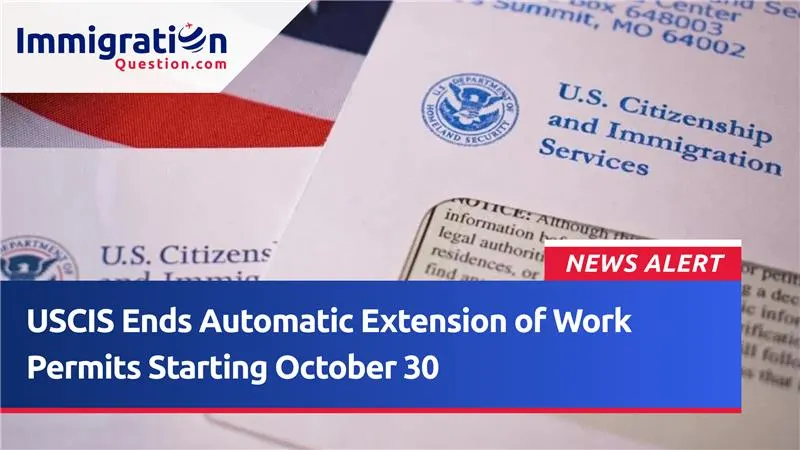
U.S. Citizenship and Immigration Services (USCIS) announced it will end the automatic extension of Employment Authorization Documents, or EADs, effective October 30, 2025. The change, framed as part of enhanced vetting measures, could disrupt employment for thousands of non-citizens awaiting renewal approvals amid existing processing delays.
USCIS to End Automatic EAD Extensions
Beginning October 30, 2025, USCIS will no longer automatically extend an EAD for most renewal applicants. Only those categories for which an extension is statutorily or regulatorily required are exempted from this policy change, such as TPS.
Under the new rule, applicants who file for renewal will no longer be authorized to continue working beyond their EAD expiration unless the renewal is fully approved. USCIS stated that this policy aligns with the administration’s goal of “reinstating integrity and security” in the employment authorization process.
Non-Citizens and Employers Brace for Delays
The change is expected to create significant challenges for non-citizens and U.S. employers who depend on work-authorized immigrants. Without automatic extensions, individuals could lose their ability to work if renewals are not approved before their current EADs expire — even if applications are submitted well in advance.
USCIS advises applicants to initiate the renewal process at least 180 days before expiration. Processing times for EAD renewals frequently surpass that window; however, this leads many to worry that delays may cause widespread employment interruptions. Industries already facing workforce shortages, including healthcare, hospitality, and technology, may be particularly affected.
Policy Aims to Tighten Vetting Procedures
In a statement, USCIS Director Joseph Edlow said the policy shift is part of a broader initiative to strengthen “alien screening and vetting.” According to the agency, the measure is designed to ensure that all employment authorization decisions undergo complete review before extension or renewal.
Edlow emphasized that working in the United States “is a privilege, not a right,” and that the agency’s focus remains on protecting national security. The statement reflects the administration’s continued efforts to reassert stricter immigration controls and emphasize procedural compliance within all benefit programs.
Critics Warn of Workforce Disruptions
Immigrant advocacy groups and business associations have been voicing concerns that ending automatic extensions of EADs undermines workplace stability and hurts applicants who follow the law. They argue that the change penalizes those following legal procedures and leads to economic hardship for employers who depend on foreign-born labor.
Analysts warn the measure might make the work authorization process even more complex by adding administrative burdens with minimal security benefits. Some may see the policy as part of a generally enforcement-centered approach to immigration policy, where such restrictions take precedence over operational efficiency.
Looking Ahead
EADs that were already granted automatic extensions before October 30, 2025, remain valid under the previous rules. In such cases, renewal applications must be filed promptly, and applicants should plan for any potential delays in processing. USCIS has not indicated whether it will add resources to mitigate longer processing times under the new framework.
Employers are encouraged to check work authorization documents and refresh their compliance practices well in advance of the effective date. The change highlights the importance of early planning and clear communication between employers and non-citizen employees when navigating renewal procedures.
To continue following USCIS policy updates, visit ImmigrationQuestion.com. Post your question free on ImmigrationQuestion.com and get answers to your immigration questions from licensed immigration attorneys. For attorneys, use our innovative 3-in-1 case management software to grow your practice. Download our free app on Google Play and the Apple App Store.
Resource:
**ImmigrationQuestion.com is a third-party platform that serves as a meeting ground for licensed immigration attorneys and people with immigration questions. It is not a law firm. It is not affiliated with or endorsed by USCIS or AILA. Attorneys on this platform are independent and have the discretion to offer a free consultation and/or set their fees under the law.