
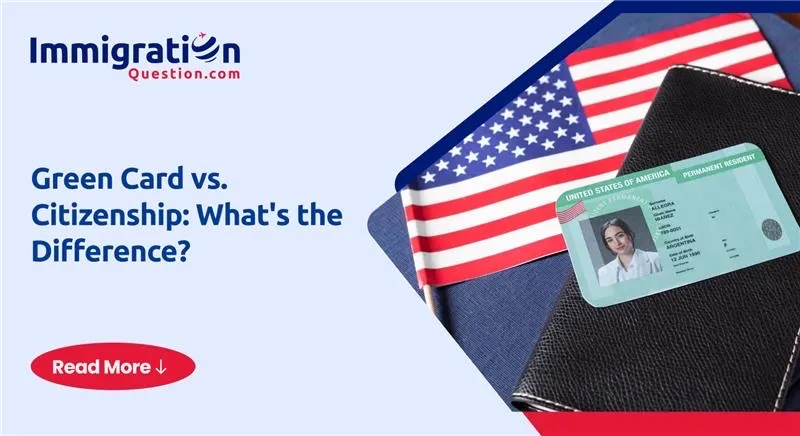
You’ve held a green card for years. You work legally, pay taxes, and build a life in America. But something feels incomplete. You wonder if becoming a citizen would change anything meaningful, or if your current status already gives you everything you need.
Many immigrants confuse permanent residency with citizenship. They sound similar but carry different rights, responsibilities, and protections. Understanding these distinctions helps you make informed decisions about your future.
This blog breaks down the difference between green card and citizenship. You’ll learn what each status means, compare the rights and limitations of both, discover how to become a U.S. citizen, and understand the advantages citizenship offers.
What Is a Green Card vs. Citizenship?
A green card grants Lawful Permanent Resident status. This means you can live and work in the United States indefinitely. You receive a physical card proving your status. Green card holders enjoy most protections under U.S. law, but don’t hold full membership in the country.
Green cards require renewal every 10 years. You must maintain continuous residence and avoid certain criminal activities. Losing your green card is possible through abandonment, fraud, or deportation.
Citizenship represents full membership in the United States. Citizens hold complete political and legal rights. They cannot be deported or lose status except through rare denaturalization cases involving fraud.
Citizens receive U.S. passports and protection from American embassies abroad. They vote in all elections and hold any public office except President if naturalized. The government treats citizens as permanent members with unconditional belonging.
The difference between green card and citizenship comes down to permanence and political participation. Green cards offer conditional residence. Citizenship offers unconditional membership.
Rights & Limitations: Green Card vs Citizenship Rights
Green card holders enjoy substantial rights. You can live anywhere in the United States. You can work for any employer without sponsorship. You pay taxes just like citizens do.
Green card holders sponsor spouses and unmarried children for immigration. You receive protection under U.S. laws, including labor protections and access to courts. You can travel internationally and return using your green card.
However, limitations exist. Green card holders cannot vote in federal or state elections. You cannot hold certain federal jobs requiring security clearance. Travel outside the U.S. for extended periods risks abandonment of your status.
Deportation remains possible for green card holders. Criminal convictions, immigration violations, or fraud can result in removal proceedings. You don’t receive automatic consular protection abroad like citizens do.
Citizens gain full citizenship rights. You vote in every election. You hold any public office except President. You petition for parents, siblings, and married children for immigration.
Citizens travel on U.S. passports, which provide visa-free entry to many countries. American embassies assist citizens abroad during emergencies. Deportation is impossible except in extremely rare denaturalization cases.
Citizens access federal jobs and security clearances without restriction. You can leave the country for years without losing status.
How to Become a U.S. Citizen: Paths & Requirements
Most green card holders become citizens through naturalization. This process requires filing Form N-400 with USCIS. You must meet specific eligibility requirements before applying.
Standard naturalization requires five years of permanent residency. Spouses of U.S. citizens only need three years. You must physically live in the U.S. for at least half that period. Extended trips abroad can disrupt continuous residence.
Applicants must demonstrate good moral character. This means no serious crimes, timely tax payments, and honest behavior. USCIS reviews your criminal history, immigration violations, and financial records.
The naturalization process includes a civics test and English test. You answer questions about U.S. history and government. You demonstrate reading, writing, and speaking English.
After passing the tests, you attend an interview with a USCIS officer. They review your application, verify information, and confirm eligibility. Approval leads to a naturalization ceremony where you take the Oath of Allegiance.
Special paths exist for military service members. Active duty service during wartime allows immediate naturalization without waiting periods. Peacetime service reduces the residency requirement to one year.
Children may derive citizenship through parents. If your parent naturalizes before you turn 18 while you hold a green card, you automatically become a citizen. Some children born abroad to citizen parents acquire citizenship at birth.
Advantages of U.S. Citizenship
Permanent protection from deportation is one of the top advantages of U.S. citizenship. Citizens cannot be removed except through rare denaturalization for fraud discovered after naturalization. This provides complete security.
Voting rights give you a political voice. You participate in federal, state, and local elections. You influence policies affecting your life, family, and community.
U.S. passports simplify international travel. Many countries offer visa-free entry to American citizens. Your passport provides consular protection worldwide.
Citizens petition for parents without waiting for visa availability. You sponsor siblings and married children, though backlogs exist.
Federal employment becomes fully accessible. Security clearances, diplomatic positions, and sensitive government roles require citizenship. These career paths offer stability.
Children born abroad to citizen parents may acquire citizenship automatically. This protects your family’s status even if they have never lived in America.
Which Path Fits You Best?
The core distinction between green card and citizenship centers on permanence, political rights, and family benefits. Green cards offer substantial stability, but with conditions. Citizenship eliminates those conditions and adds voting rights.
Weigh your personal goals carefully. Consider how long you plan to stay in America. Think about whether voting matters to you. Evaluate your family sponsorship needs.
Most immigrants eventually pursue citizenship for the security and expanded rights. The naturalization process takes time but provides lifelong benefits.
If you need personalized help or have further questions, visit ImmigrationQuestion.com. You can ask your questions for free and have experienced immigration attorneys answer your questions.
Frequently Asked Questions
Can a green card holder lose their status?
Yes. Green card holders can lose status through deportation for crimes or immigration violations, abandonment by living abroad for too long, or fraud. Citizenship eliminates these risks permanently, except in rare denaturalization cases.
How long must a green card holder wait before applying for citizenship?
Most green card holders wait five years before applying for naturalization. Spouses of U.S. citizens only need three years. Military service members may qualify immediately or after one year, depending on service type.
Do citizens still pay taxes on foreign income?
Yes. U.S. citizens and green card holders both pay taxes on worldwide income. Citizenship doesn’t change tax obligations. You must report foreign income, bank accounts, and assets annually, regardless of immigration status.
Can dual citizenship affect my green card holder vs citizen status?
The U.S. allows dual citizenship. Becoming a U.S. citizen while keeping your birth country citizenship is legal if that country permits it.
What happens to green card renewal when you become a citizen?
You no longer need green card renewal once you become a citizen. Your green card becomes obsolete. USCIS issues a naturalization certificate as proof of citizenship. You then apply for a U.S. passport instead of renewing your green card.