The line between policing and warfare in America is blurring.
In the early hours of October 1, residents of a low-rent apartment complex on Chicago’s South Shore woke up to the sound of boots on rooftops and the thump of helicopter blades. Moments later, explosions tore through the building. Federal immigration agents had arrived with air support, flash-bang grenades, and door charges.
Families were dragged out of their homes in zip ties. Some were half-dressed. By sunrise, the building was in ruins. Many residents had nowhere to return to.
Federal Raids Now Resembling Combat Missions
Reports from across the country describe the same system: heavily armed agents in camouflage, armored trucks rolling into neighborhoods, and tactics borrowed from military training manuals.
In southern California, agents in combat gear raided a marijuana farm, firing flash-bang grenades into the ground to scatter workers and bystanders. The noise was deafening. Some thought they were being bombed.
A Pattern Forming
This isn’t the first time the government’s immigration enforcement has taken a militarized turn.
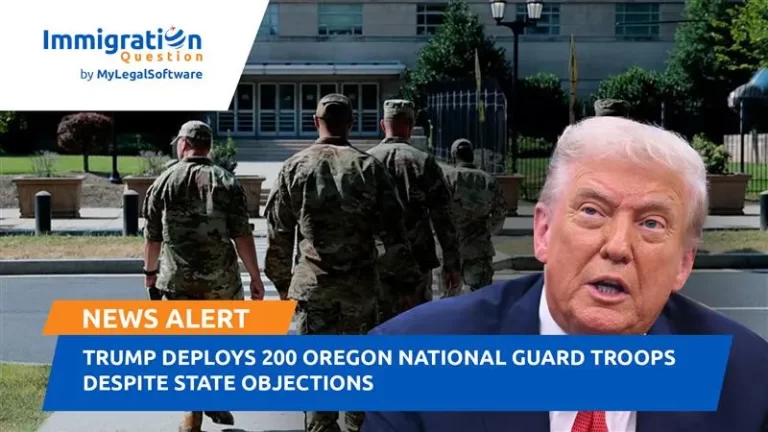
Back in June, we reported on the division among Americans after President Donald Trump ordered the military to help “restore order” during protests that followed immigration raids in Los Angeles. That decision drew sharp criticism.
Polls showed that only 35% of respondents approved of Trump’s response to the protests, which was to deploy National Guard troops and U.S. Marines to disperse demonstrators. Half of those surveyed disapproved.
Then came another unprecedented step. The administration approved up to 600 military and civilian lawyers from the Department of Defense to temporarily serve as immigration judges. The goal was to speed up deportation cases and immigration prosecutions.
Each of these moves has pushed immigration enforcement deeper into military territory.
From Policing to Warfare
Law enforcement officers traditionally rely on crowd-control tactics that have been debated and approved by local governments. But that’s not what’s happening now.
In Chicago, residents describe armored vehicles, masked agents, and projectile weapons being fired directly at civilians and members of the press. Similar scenes have unfolded in Los Angeles and other cities during immigration enforcement surges.
Experts within the Department of Homeland Security have also expressed concern. Some of the agencies involved, such as Homeland Security Investigations and certain tactical teams under Customs and Border Protection, don’t have training in urban crowd control. Their focus is on trafficking, fraud, and high-risk warrants, not neighborhood raids.
Washington’s Silence Raises Public Concern
Lawmakers have demanded answers from the Department of Homeland Security. They want to know which agencies authorized the helicopters, why military gear was used, and how these operations were justified. So far, DHS hasn’t responded.
Meanwhile, President Trump, while addressing military officers recently, suggested that American cities could serve as “training grounds” for troops.
Civil rights groups say this mindset is fueling a dangerous normalization of force. When immigration enforcement looks like a battlefield, communities stop feeling like home.
Journalists Caught in the Crossfire
The press isn’t being spared either.
During the Chicago operation, reporters covering the raid say they were hit with pepper-spray bullets and tear gas. Press groups, including several local Chicago outlets, have filed lawsuits demanding protection for journalists and an end to the use of chemical agents against reporters.
A similar injunction was granted earlier in Los Angeles, limiting police use of force and prohibiting the arrest of journalists. But enforcement of those limits remains unclear.
The Cost of a Militarized Approach
Immigration enforcement under the current administration looks more militarized than ever.
Black Hawk helicopters, armored vehicles, Predator drones, and military-grade weapons are increasingly visible at raids and protests. What once were tools of war have become instruments of domestic enforcement.
Civilian spaces are now treated like combat zones. And the people caught in the middle, including families, journalists, and everyday workers, are paying the price.
Looking Ahead
As federal agencies double down on militarized immigration tactics, the question now is how far this approach will go, and who will be held accountable when things go wrong. Lawmakers are demanding transparency, but silence from Washington suggests this story is far from over. What happens next could redefine the limits of law enforcement in America.
At ImmigrationQuestion.com, we’ll continue to track these developments and their impact on communities across the country. Our goal is to provide you with the facts, so you’re always informed about what’s happening in U.S. immigration.
For additional immigration news and analysis, check ImmigrationQuestion.com. Get answers to your immigration questions from licensed immigration attorneys. For attorneys, use our innovative 2-in-1 case management software to grow your practice. Download our free app on Google Play and the Apple App Store.