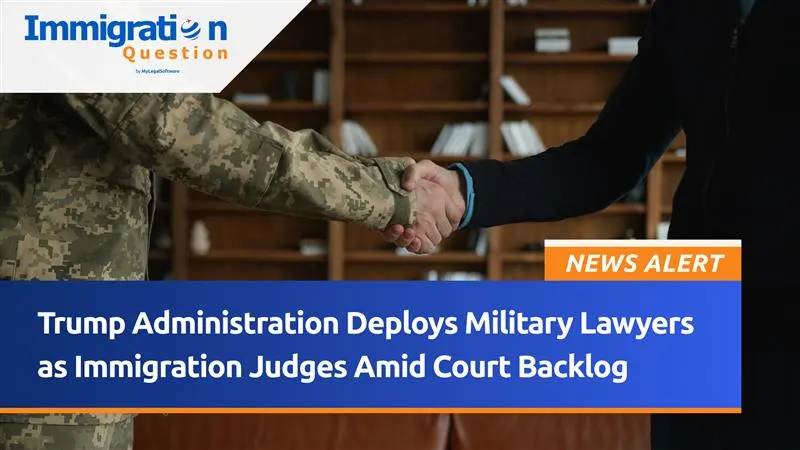
The Trump administration is bringing in Army Reserve and National Guard lawyers to act as temporary immigration judges. This comes after the dismissal of dozens of experienced judges. The plan, expected to bring in up to 600 military attorneys, raises alarms among legal experts who warn of risks to due process, military justice, and immigrant rights.
Military Attorneys Enter Immigration Courts
Training for the first group of Army Reserve lawyers begins this week, with another round scheduled in the spring. Approximately 100 reservists are slated to participate, with half of them beginning six-month assignments immediately after their training.
According to internal communications reviewed by the Associated Press, the administration ultimately intends to bring in as many as 600 attorneys from the military ranks to bolster immigration courts.
Emails circulated to Army Reserve legal officers described the program as a “nationally significant opportunity” and encouraged lawyers with administrative or military judicial experience to volunteer.
The announcement comes after more than 100 permanent immigration judges were dismissed or left their posts, a development that critics say created an artificial shortage to justify temporary appointments.
Immigration Courts Strained by Record Caseload
The U.S. immigration court system is experiencing historic levels of stress, with a backlog of over 3.4 million cases. The backlog has increased more than two times in four years, creating delays of years for immigrants waiting for asylum, residency, or being removed from deportation.
Administration officials hope that tapping military attorneys will alleviate some pressure on the system in the short term and expedite the processing of cases.
However, immigration activists warn that merely adding judges does not address the underlying issues, such as limited access to counsel, inconsistent rulings, and inadequate funding for complex asylum cases.
Concerns Regarding Training and Expertise
Immigration law is notoriously complex, famously described by officials as more Byzantine to navigate than the U.S. tax code. Most permanent judges have at least seven years of experience as lawyers, undergo weeks of training, and serve a probationary period before they can hear cases that determine whether families are torn apart or are allowed to remain in the country.
Critics fear that it will push them into immigration courts with minimal preparation, leading to unequal rulings, judicial errors, and additional appeals that further clog the system.
Threats to Military Justice and Due Process
Democratic legislators expressed concerns that removing hundreds of JAG officers from their positions could compromise the military justice system, where they are involved in prosecuting cases, representing service members, and advising commanders.
Legal commentators warn that poorly trained temporary judges may undermine due process for immigrants.
Since asylum and deportation hearings often hinge on subtle legal niceties and plausible fear determinations, critics lament that lives will be placed in jeopardy if judgments are rushed or messed up by inexperienced judges with minimal understanding of the complexities of immigration law.
Political and Legal Fallout
The plan’s advocates claim that the military’s tradition of flexibility and discipline can be applied to impose order on a frayed immigration system. Critics regard the decision as part of a broader effort by the Trump administration to accelerate deportations and reduce judicial autonomy.
Immigration lawyers have warned that lowering the bar for who can serve as a judge undermines the integrity of a system already under heavy scrutiny.
Look Ahead
With the immigration backlog showing no signs of easing and hearings stretching years into the future, the debate over whether military lawyers should preside over civilian immigration cases will continue to grow.
The outcome could reshape not only the immigration court system but also the boundaries between military service and civilian law.
For continuing updates and expert analysis, visit ImmigrationQuestion.com. Get answers to your immigration questions from licensed immigration attorneys.
For attorneys, use our innovative 2-in-1 case management software to grow your practice. Download our free app on Google Play and the Apple App Store.
Resources:
- https://apnews.com/article/immigration-judges-military-lawyers-deportation-9f9d42869469e42240ef0720c25fc681
- https://www.yahoo.com/news/articles/trump-administration-taps-army-national-040442039.html
- https://blog.immigrationquestion.com/news/trump-administration-taps-military-attorneys-to-serve-as-temporary-immigration-judges/
**ImmigrationQuestion.com is a third-party platform that serves as a meeting ground for licensed immigration attorneys and people with immigration questions. It is not a law firm. It is not affiliated with or endorsed by USCIS or AILA. Attorneys on this platform are independent and have the discretion to offer a free consultation and/or set their fees under the law.