
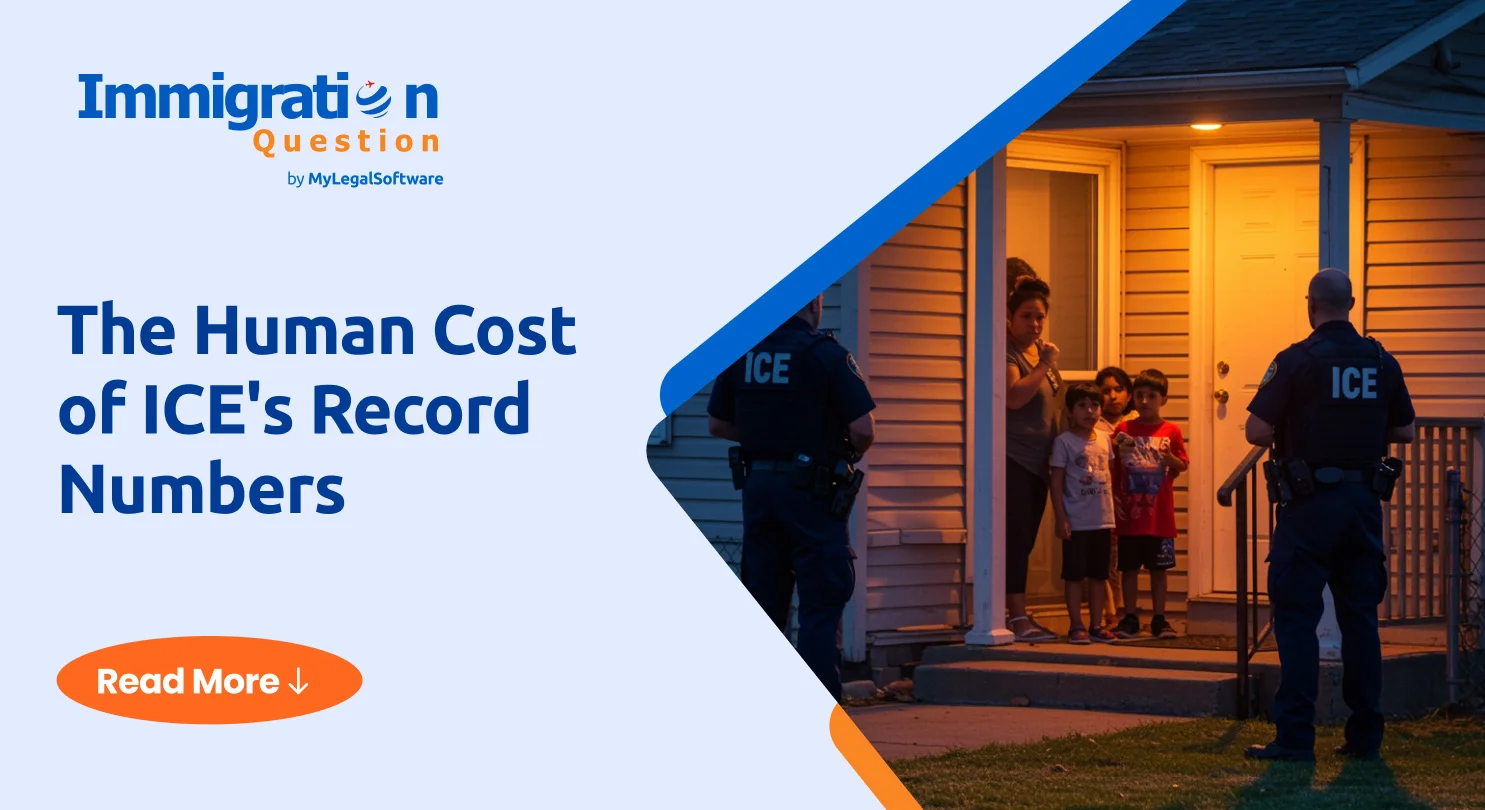
Record-Breaking Detention Figures
Recent NY Times reports show that Immigration and Customs Enforcement (ICE) is now detaining more immigrants than at any point in modern U.S. history — over 60,000 people. This number marks a staggering increase from just 39,000 in January. On the surface, this could be seen as a sign of ICE’s operational strength and increased capacity. But beneath the statistics lie a troubling reality.
This surge comes amid mounting political pressure from the Trump administration, whose senior officials have made clear their expectation for swift arrests and deportations. To achieve this, $45 billion has been allocated through the Republican-backed One Big Beautiful Bill—a funding package enabling the rapid expansion of detention centers nationwide.
ICE’s latest efforts are designed to detain and process immigrants at an unprecedented pace. But as capacity grows, so do concerns about the legality and fairness of the system’s actions.
When Numbers Rise but Fairness Falls
Increasing the ability to detain might sound like an administrative win if we view immigration primarily as a security issue. Yet, the reality is that this rapid growth has been accompanied by alarming reports: unlawful arrests, individuals detained far from their families, limited access to legal counsel, and inadequate living conditions.
The system appears to be prioritizing numbers over due process, and the impact on individuals is severe.
The Case of Sarah Shaw
Consider the case of New Zealand citizen, Sarah Shaw (via The Guardian). She wasn’t crossing the border illegally, nor was she hiding from the authorities. Shaw was attempting to re-enter the U.S. from Canada with her six-year-old son, fully expecting to continue her life in the States.
She had a valid work authorization, renewed and in good standing. However, part of her immigration paperwork, an I-360 visa granted to survivors of domestic violence, was still pending approval—a technicality that could have been addressed through administrative processing, not punitive measures.
Instead, Shaw was taken into custody. ICE officers placed her and her young son into an unmarked van and transported them thousands of miles to an immigration processing center in Texas. They were confined to a shared room and prohibited from wearing their own clothes.
Collateral Damage: The Impact on Her Son
Shaw’s six-year-old son, a legal immigrant, was detained alongside her. Immigration advocates say there was no legal necessity for his detention. The decision to hold him showed a troubling pattern in ICE’s recent actions — holding families in detention to discourage others from attempting to enter the country.
Children held in detention centers are at risk of developing lasting trauma from being confined in a facility not designed for their needs. Shaw’s son was uprooted from his home, his routines, and his loved ones.
A Missed Chance to Show Compassion
Border officials could have granted Shaw humanitarian parole under existing DHS guidelines for vulnerable individuals, especially given her history as a domestic violence survivor and the fact that all three of her children had approved visas. This option would have allowed her to remain in the country while her I-360 was processed, without the harm and cost of detention.
Instead, the choice made was to confine her and her son in a high-security facility, thousands of miles from home.
A System Designed to Punish
Shaw’s experience is part of the recent trend in which ICE’s expanded detention power is being applied indiscriminately. People with pending or valid immigration claims are swept up alongside those who have committed serious crimes, and all are treated as though they pose the same threat.
This approach sends a chilling message: being in the process of resolving your immigration status offers little protection from the machinery of enforcement.
Beyond the Stats: Remembering the People
The headline numbers — 60,000 people detained — might be a victory for those advocating for strict immigration enforcement. But statistics strip away the human element. Behind every number is a story of a life disrupted, a family separated, a child traumatized, or a future put on hold.
It’s important to ask: Who is being detained? Under what circumstances? And at what cost to their rights?
Detention Without Dignity
ICE’s record-breaking detention numbers are a product of policy choices. Choices that favor punishment over discretion.
For many immigrants, these choices have turned what could have been a simple administrative process into a deeply damaging personal ordeal.
A just immigration system must balance enforcement with humanity. Until it does, bigger detention centers are no achievement if they harm the very people they’re meant to manage.
A Lifeline for Immigrants
As ICE continues to expand its detention capacity, immigrants are likely to face more encounters with enforcement and detention. In times like these, there is a dire need for trusted legal guidance.
ImmigrationQuestion.com connects immigrants with licensed immigration attorneys who are committed to protecting clients’ rights.
Get the legal support you need today—visit ImmigrationQuestion.com.