
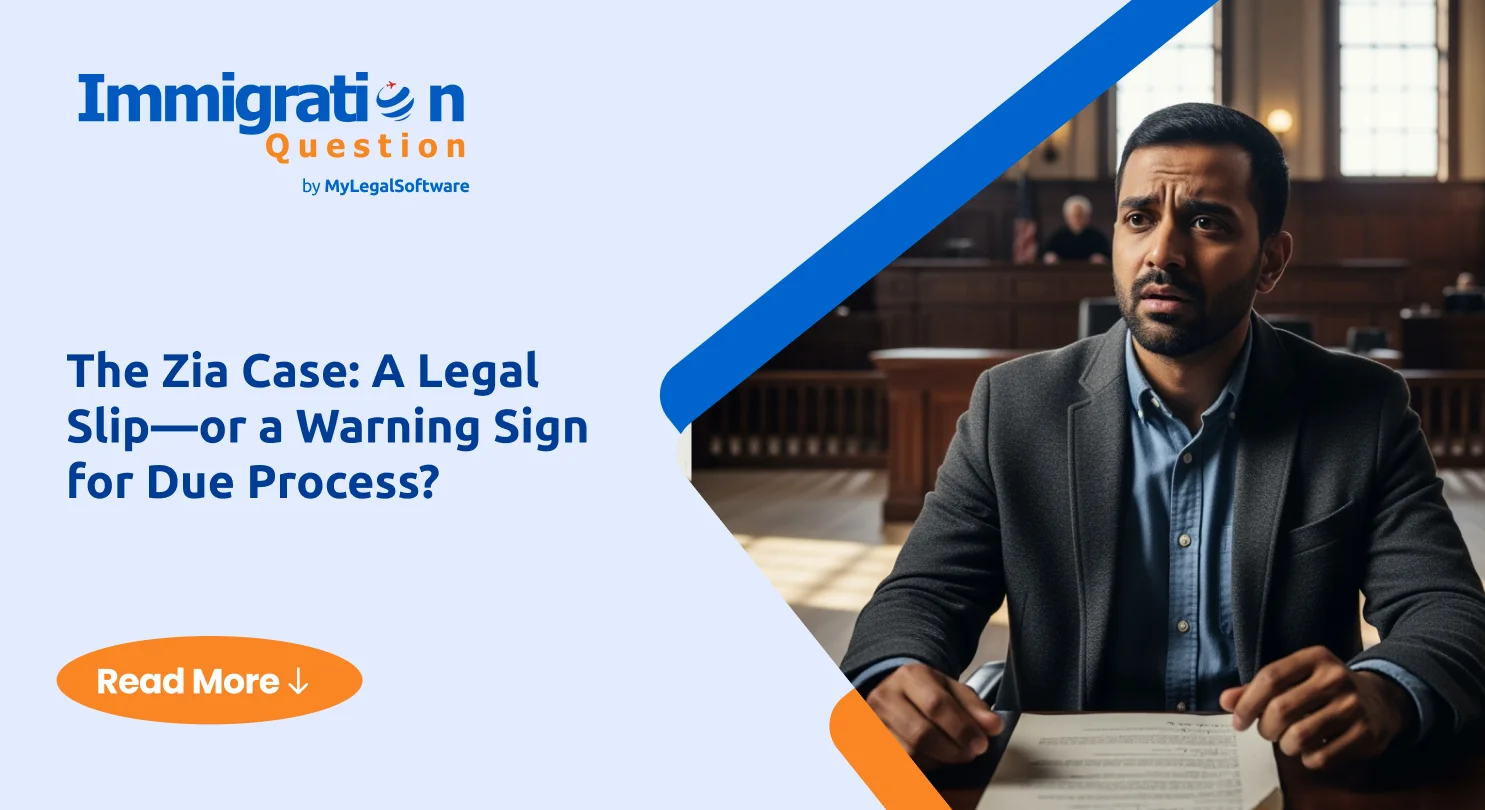
When Zia, an Afghan interpreter who risked his life aiding U.S. forces, was arrested during a routine green card appointment on July 16, 2025, eyebrows shot up, and rightly so. He entered the U.S. legally under humanitarian parole and holds an approved Special Immigrant Visa (SIV). Yet ICE detained him immediately after check-in—without warning, legal counsel present, or any criminal history. Shortly thereafter, a federal judge issued a stay, halting his removal pending further court review.
Zia’s case isn’t just about one man. It’s about a system that may be weaponizing due process loopholes, leaving law-abiding immigrants—many of whom the U.S. has relied on—stripped of their rights and dignity. It also forces one to ask a serious legal question: Was this an administrative misstep or a glowing warning sign that legal protections are fading fast?
A Visa, a Parole, and a Pair of Handcuffs—What Went Wrong?
Zia was not undocumented. He came to the U.S. with an approved Special Immigrant Visa and humanitarian parole, as part of the federal Operation Allies Welcome initiative. It is for Afghan nationals who had aided U.S. missions during wartime.
And yet, on July 16, 2025, ICE claimed he was subject to expedited removal—a fast-track deportation process meant for migrants who entered unlawfully and have been in the country for less than two years. According to Zia’s attorneys, that does not apply to him.
So, what happened?
ICE pointed to a vague “serious criminal investigation” as grounds for his detention, but no charges were filed, and no details were provided. His lawyer, Lauren Petersen, told the press that the criminal accusation was both unsubstantiated and misapplied, and that Zia has no criminal record.
From a legal lens, this case seems less like a paperwork mix-up and more like an abuse of discretion.
Detention Without Clarity: A Due Process Crisis?
Under U.S. law, noncitizens, especially those with lawful status, are still guaranteed due process under the Fifth and Fourteenth Amendments. That includes notice, access to counsel, and the ability to challenge detention. In Zia’s case, none of that happened initially.
Instead, he was swiftly transferred out of state, away from his legal team and family. There were no clear charges, no bond hearing, and no court reviews—until his attorneys filed an emergency habeas corpus petition that led to a temporary stay by a federal judge in Boston.
That’s the problem. Why did it take a legal emergency to slow down an unlawful detention?
What This Means for Other Immigrants and the Law
Zia is not alone. In recent months, other Afghan allies—also under humanitarian parole or SIV status—have reportedly faced similar ICE actions, raising fears that immigration enforcement is overreaching without legal basis.
If DHS and ICE can apply expedited removal to someone who served with the U.S. military, entered legally, and complied with every federal protocol, who’s next?
Legal advocates worry that this could set a dangerous precedent, allowing federal officers to detain even lawful immigrants under opaque allegations and unreviewed authority.
This is not just a technical error. It’s a warning bell.
What Legal Advocates Must Do Now
1. Challenge Expedited Removal Overreach
Legal organizations must file strategic litigation that narrows the scope of expedited removal and pushes back against its misuse. These are not speed cases—they require judicial oversight.
2. Protect and Educate Parolees and SIV Holders
Many Afghan and other humanitarian entrants are unaware of their vulnerability during check-ins. Legal advocates should provide legal accompaniment and set up hotlines for emergencies like Zia’s.
3. Push for Congressional Oversight
Congress must step in to investigate whether ICE is misusing expedited removal powers and to clarify legal protections for visa-holders with ongoing adjustment applications.
4. Build Rapid Legal Response Teams
Cases like Zia’s move fast. Local legal coalitions should be prepared with habeas templates, on-call attorneys, and direct lines to federal court clerks to stop illegal removals before they escalate.
5. Media & Storytelling Advocacy
Behind every deportation order is a person, a family, a life. Zia’s story must not be the last one we hear. Legal organizations must collaborate with journalists to shed light on these injustices and amplify immigrant voices.
Final Thoughts: A Test of Our Legal Conscience
The Zia case should unsettle every legal professional in the country. It shows how due process can be sidelined in silence, under the guise of law enforcement. It highlights the fragility of rights when discretion is unchecked.
This is not just about Zia. This is about whether our legal system still honors its promises to those who follow the rules, serve with honor, and seek safety in the very country they defended.
As legal advocates, we must not only defend due process—we must rebuild it.
If you or someone you know has a Special Immigrant Visa, is on humanitarian parole, or is navigating the green card process and feels at risk—don’t wait.
At ImmigrationQuestion.com, we connect immigrants to licensed attorneys for immediate guidance, emergency legal support, and answers you can trust. Visit ImmigrationQuestion.com today to ask your questions for free and get trusted answers within hours. Your freedom shouldn’t hinge on confusion—it should rest on the law.