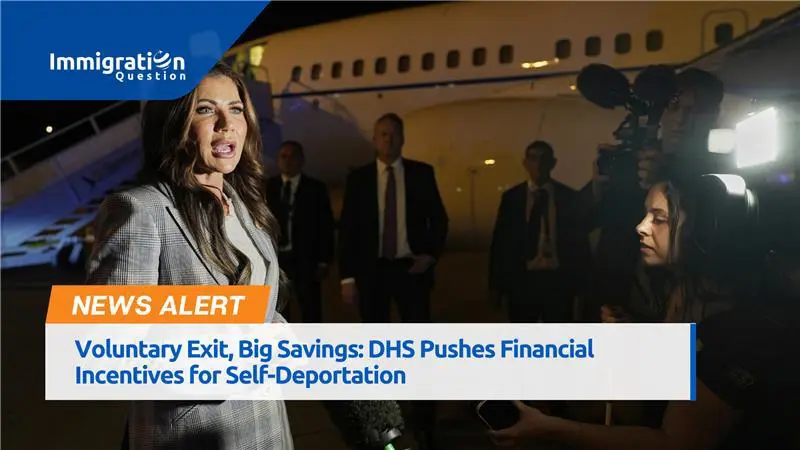
The Department of Homeland Security (DHS) has unveiled a contentious and historic program offering money and travel assistance to illegal aliens who voluntarily agree to depart the United States and return to their countries of origin. The CBP Home App enables one to use tools to arrange one’s own departures, bypassing regular immigration enforcement processes.
Through the program, the eligible migrants who self-deport using the app will receive a $1,000 incentive payment upon confirmed return to their country of origin. The financial reward is complemented by logistical travel support, including assistance in buying airline tickets. DHS officials describe the strategy as a “dignified and safe” means for unlawful immigrants to depart the United States—without facing arrest or detention by U.S. Immigration and Customs Enforcement (ICE).
An Affordable Government Policy
Opponents view the change as a strategic move towards mass self-deportation, while DHS insists that the monetary benefits are budget friendly. DHS claims that by offering voluntary return services through CBP Home, the deportation expense can be reduced by up to 70%.
Facilitations have already begun, including one recent instance of a noncitizen’s return from Chicago to Honduras through the app and government support. DHS reports additional departures planned in the coming days, which could be the beginning of broader implementation.
Avoiding Detention and Preserving Reentry
In addition to the financial benefits, those who sign up to exit via CBP Home may be deprioritized for detention, provided they visibly indicate their intention to leave. DHS explains that utilizing this voluntary method can help individuals stay eligible to return to the U.S. in the future legally—a stark contrast to those who are placed in ICE removal proceedings, which are typically followed by reentry prohibitions.
As department officials describe it, the plan is designed to cut down on enforcement burden, lower detention levels, and offer a quick off-ramp for unauthorized immigrants willing to steer clear of legal involvement.
A New Drive for Self-Deportation
This step is part of the broader immigration enforcement policy of the current administration—a policy that favors voluntary compliance rather than mass detention. By making it cheaper and more straightforward, DHS hopes to induce more undocumented immigrants to depart on their initiative.
Where previous administrations have toyed with voluntary return, this is the first time a high-profile, technology-enabled initiative has been paired with direct cash aid. DHS is calling it humane and pragmatic as a safer alternative to the fear and trauma that so frequently accompany immigration raids.
Critics Raise Red Flags
Not everyone concurs. Immigration activists warn that giving cash to self-deport places unnecessary pressure on vulnerable migrants. Some think the policy will be converted into a coercive tool in disguise as assistance—especially when paired with intensified ICE enforcement and threats of future crackdowns.
Others note that even after people are identified in the system through CBP Home, they may still be vulnerable if departure plans are postponed or interrupted.
What’s Next?
As DHS widens the CBP Home self-deportation program, the face of immigration might once again be turned upside down. Will the threat of economic support spur a large-scale exodus, or will suspicion and apprehension deter migrants from benefiting from it? The coming months will tell whether this strategy redefines enforcement benchmarks—or fuels further furor.
To stay up-to-date and informed, visit our news page, ask your immigration questions on Immigration Question, and get responses from licensed attorneys. For attorneys, streamline your case and lead management when you download the Immigration Question app.